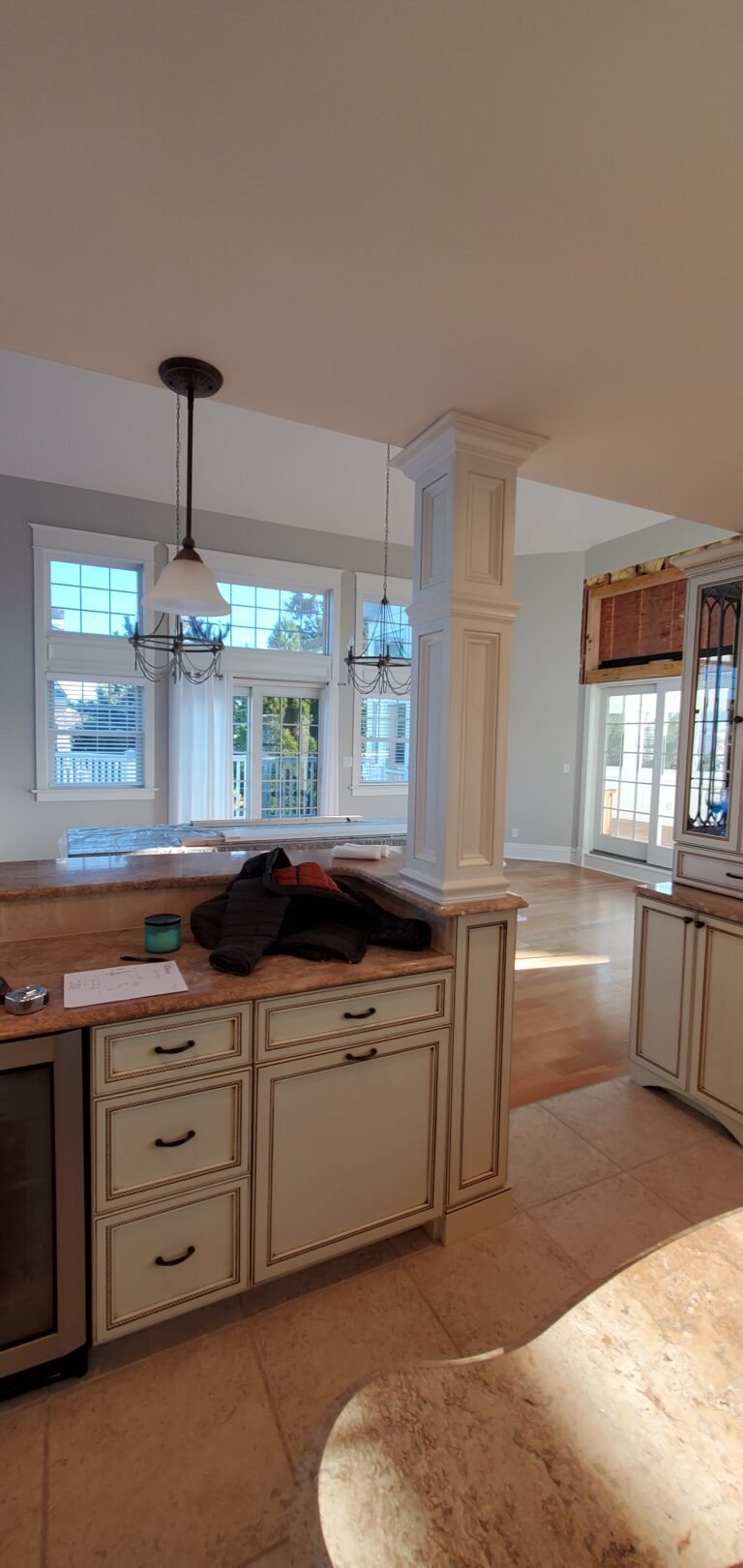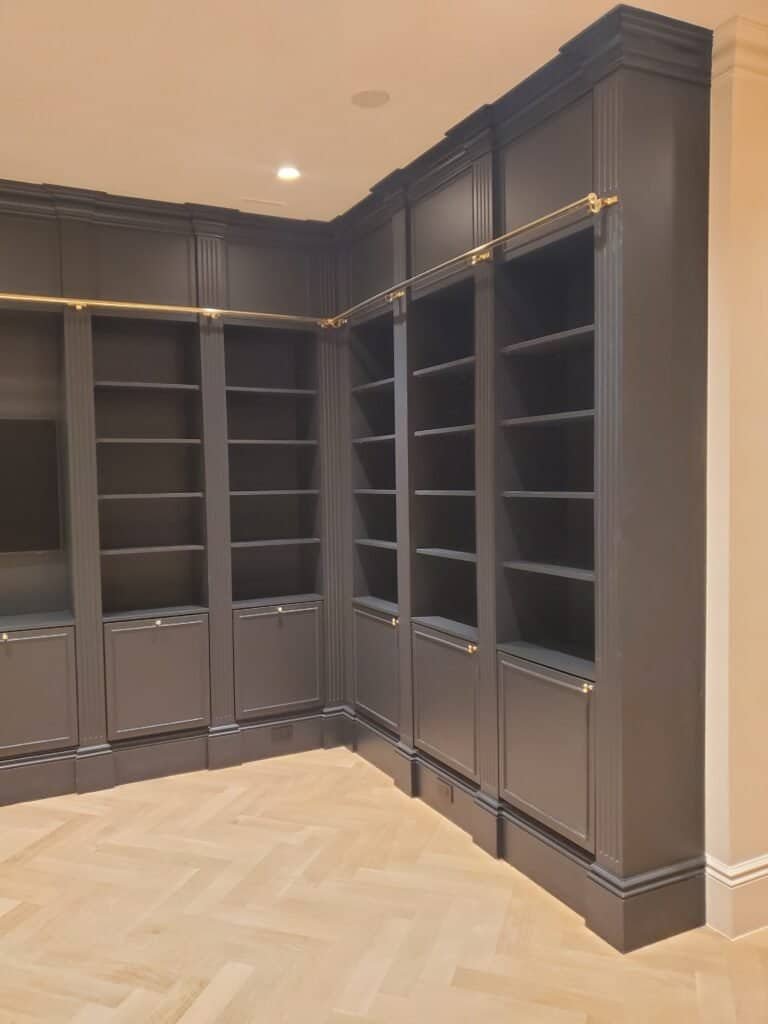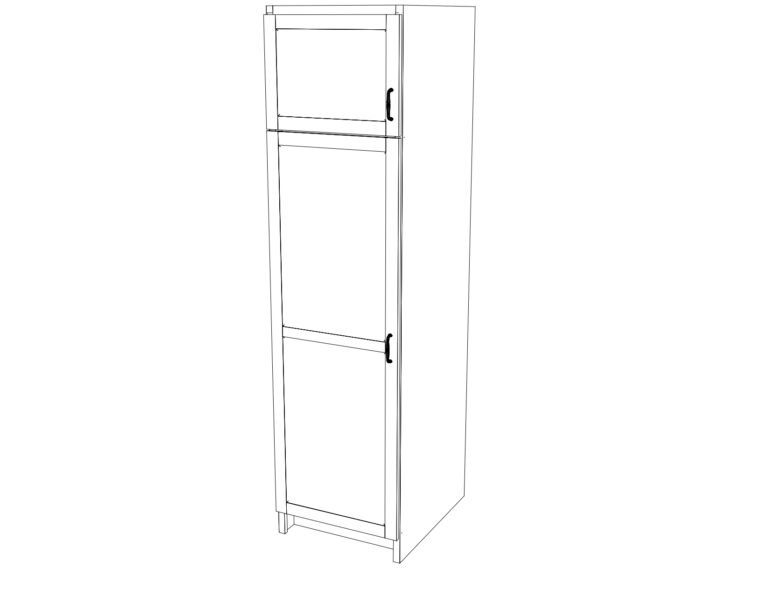

Inset doors sit flush inside the cabinet frame, like a drawer in a fine dresser. Overlay doors sit on top of the frame, covering it. That one difference drives the look, the cost, the storage math, and the skill required to build the cabinet, and it is the single most consequential door decision you will make.
The Three Options in Plain Words
| Style | What You See | Best For |
|---|---|---|
| Full overlay | Doors nearly touching, frame hidden | Modern and transitional kitchens, maximum storage |
| Inset | Doors flush inside the frame, fine even gaps | Furniture-grade traditional and classic kitchens |
| Beaded inset | Inset plus a fine milled bead framing each opening | Formal and historic rooms where detail rewards a close look |
Partial overlay, the fourth option, shows a strip of frame between doors. It is the budget signature of dated builder kitchens, and we do not recommend it for new work.
Why Inset Costs More
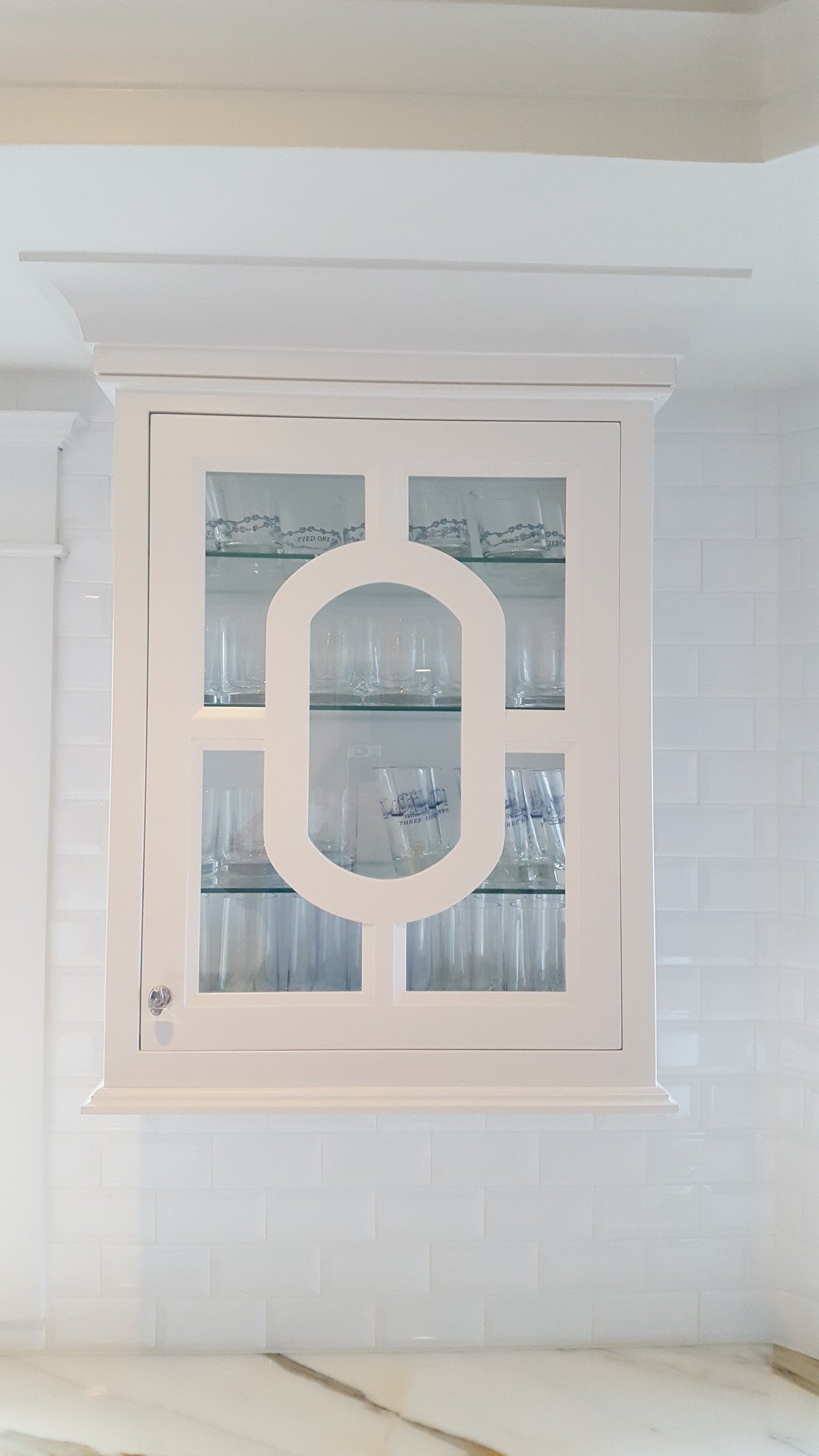
An inset door has nowhere to hide. The gap around it, the reveal, must be even to roughly a nickel’s thickness on all four sides, through every season’s humidity, for decades. That demands drier lumber, tighter joinery, and hand fitting door by door. It is the test piece of our trade, and the reason inset kitchens read as furniture. The engineering behind keeping those gaps stable is the same story as our quarter sawn oak guide: stable wood, correctly built.
Ask a shop how they handle inset doors in August. If the answer is a blank look, order overlay from them. If the answer involves wood selection, acclimation, and gap allowances, you have found people who have done it before.
Our senior builder, Choice Custom Cabinetry
How to Choose
- House style first. Farmhouses, colonials, and formal rooms flatter inset. Clean modern spaces flatter full overlay. Our shaker guide covers how the door style itself interacts with this choice.
- Storage math second. Overlay gains a little usable width in every cabinet because doors do not need frame clearance. Small kitchens feel it; large kitchens do not.
- Budget honestly. Inset costs more for real reasons. If it forces cheaper materials elsewhere, choose overlay on better boxes instead. Construction beats styling, always.
- Split the difference. Inset on the visible showpiece wall, overlay in the pantry and laundry. Common, sensible, and nobody ever notices.
Baseline planning standards for door and drawer clearances are published by the Kitchen Cabinet Manufacturers Association and the NKBA; what a custom shop adds is the judgment about where each style belongs in your actual house.
Deciding for your own kitchen? Bring the question to us directly: request a free consultation or visit the showroom at 3400 Horseshoe Pike in Honey Brook. We would rather help you choose well than sell you fast.