Honey Brook, PA · Since 1979

Shaker Cabinets,
Actually Done Right

Every cabinet line sells something called shaker. Very few build it the way the name promises: solid wood, honest joinery, proportions that come from function.

45+
Years Building
100%
Solid Hardwood
Correct
Proportions
Free
Consultation
Home  /  Custom Cabinetry  /  Shaker Style Cabinets

The Style
Why Shaker Survived Every Trend Since 1820

The Shakers built furniture the way they lived: nothing ornamental, nothing hidden, everything serving use. A shaker door is a frame and a flat panel, and that is all it is. The style survives because those proportions come from function, not fashion, which is why a shaker kitchen from 1995 still looks current and a raised-panel kitchen from 1995 does not. The original pieces at Hancock Shaker Village make the case better than any showroom.

Here is the industry’s open secret: most shaker cabinets sold today are MDF center panels in thin frames, with joints that are stapled or dowelled instead of joined. They photograph identically to ours. They do not age identically. Our shaker doors are solid hardwood frames with proper joinery and panels that float the way wood movement demands, the construction detailed in our solid wood guide.

Amish shops and Shaker workshops are cousins in philosophy: build plainly, build honestly, let the use decide the form. This is the style our shop was born speaking. See a recent example in our white kitchen project.

“You can spot cheap shaker across the room once you know the tell: rail width. Production lines use one narrow width everywhere to save material. Correct shaker frames are proportioned to the door size, wider on tall doors, and the room just feels right without you knowing why.”
Our design desk

White shaker kitchen cabinets with marble countertops, custom built
Shaker frames proportioned to the door, not to the saw
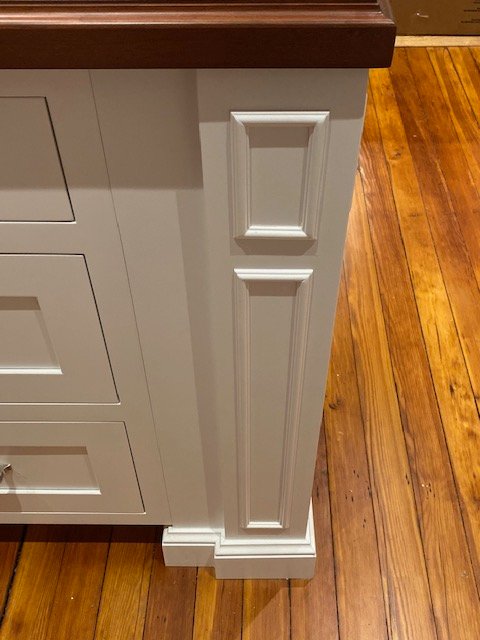
Custom white shaker cabinetry detail with quality hardware
Flat panels, clean reveals, hardware with weight
Coastal white shaker kitchen with blue backsplash, Avalon NJ project
Shaker at the shore, from our Avalon project

Variations
One Style, Many Dialects

Classic Shaker
The default
Square edges, flat panel, painted or clear-finished hardwood. Right in nearly every house built since 1800.
Inset Shaker
Furniture grade
Doors set flush inside the frame with knife-edge gaps. The most demanding build and the most rewarding look.
Beaded Inset
Detail
A fine bead milled around the opening frames every door like a picture. Traditional rooms sing with it.
Wide-Rail Modern
Current
Slightly wider frames with slab-like calm. Bridges shaker and contemporary, popular in two-tone schemes.
Shaker in Wood
Natural
Shaker frames in white oak, cherry, or hickory, where the grain becomes the ornament.
Whole-House Shaker
Consistency
The style extends naturally to vanities, pantries, and built-ins.

Elegant white shaker kitchen with island, custom project
The style carries formal rooms without costume
White shaker kitchen island with seating, coastal custom kitchen
Island fronts in matching shaker rhythm
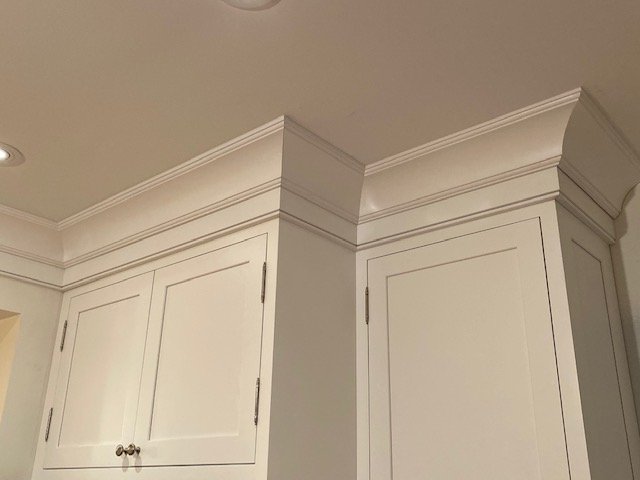
Custom shaker cabinetry with architectural millwork details
Millwork carries the language to the ceiling

Practical Advice
Ordering Shaker Without Regrets

1
Ask what the center panel is made of
Solid wood or plywood panels last; MDF panels in painted doors crack at the joint lines within years. This one question sorts the market faster than any brand name. Planning baselines from the NKBA will not tell you this; the shop must.
2
Match rail width to door size
Tall pantry doors need wider frames than small drawer fronts. If every door in the display has identical rails, you are looking at production economics, not design.
3
Choose the edge detail deliberately
Square inside edges read modern; a slight bevel reads transitional; a bead reads traditional. Tiny milling choices, large room-feel differences. We show samples of each.
4
Do not over-decorate it
Shaker plus heavy corbels plus ornate hardware equals costume. The style’s power is restraint. When in doubt, remove one thing. The Shakers would.

Questions
Frequently Asked Questions
Honestly, it depends on more variables than any web page can price: the wood species, the finish, the door style, how much of the room is cabinetry, and the condition of the walls we are building against. Two kitchens of the same size can land far apart. We explain the methodology in our kitchen cost guide, and the fastest way to a real number is a free consultation with your measurements.
Painted suits most homes and shows the proportions crisply. Natural wood shaker in oak or cherry adds warmth and hides wear better. Households with heavy use often choose wood for exactly that reason.
Slab is a single flat panel, no frame. It reads fully modern and shows every fingerprint on flat sheens. Shaker adds shadow lines that hide daily life better and fit more house styles.
If you love furniture and notice gaps and reveals, yes, nothing else satisfies afterward. If you want maximum storage from the same wall, overlay uses space slightly better. We build both and will not push either.
Yes. We measure rail widths, edge details, and finish, then build matching doors. Bring one door to the showroom and we will take it from there.


Hold a Real Shaker Door

Our showroom displays let you feel the difference between joined solid wood and stapled MDF. It takes about four seconds.