Honey Brook, PA · Since 1979

Quarter Sawn & Rift Cut
White Oak Cabinetry

The cut matters as much as the species. Quarter sawn and rift cut white oak give you the straightest grain, the most stability, and a hundred years of pedigree.

45+
Years Building
100%
Solid Hardwood
In-House
Milling
Free
Consultation
Home  /  Custom Cabinetry  /  Quarter Sawn White Oak

The Cut
Same Tree, Three Different Woods

Most people choose a species and stop. Woodworkers know the sawing angle changes everything. Plain sawn white oak shows broad cathedral arches. Quarter sawn, cut with the growth rings near vertical, shows straight grain crossed by shimmering ray fleck, the signature of craftsman furniture. Rift cut, sawn at a slight angle off quarter, gives the straightest, quietest grain of all, which is why architects specify it for modern work.

The differences go past looks. Quarter and rift cut boards move roughly half as much across their width as plain sawn boards when humidity swings, which means doors that stay flat and joints that stay tight. That stability is why the great Stickley pieces from a century ago still work, and why the American Hardwood Information Center lists white oak among the most stable domestic choices in these cuts.

We buy quarter sawn and rift lumber selectively, mill our own profiles, and match grain across every elevation. See the general species story on our white oak kitchens page; this page is about taking it to the top shelf.

“Rift white oak is the most forgiving beautiful wood we build with. It photographs clean, it stains even, and it does not fight the finisher. When a client cannot decide, rift oak with a natural finish is the answer that never comes back to haunt anyone.”
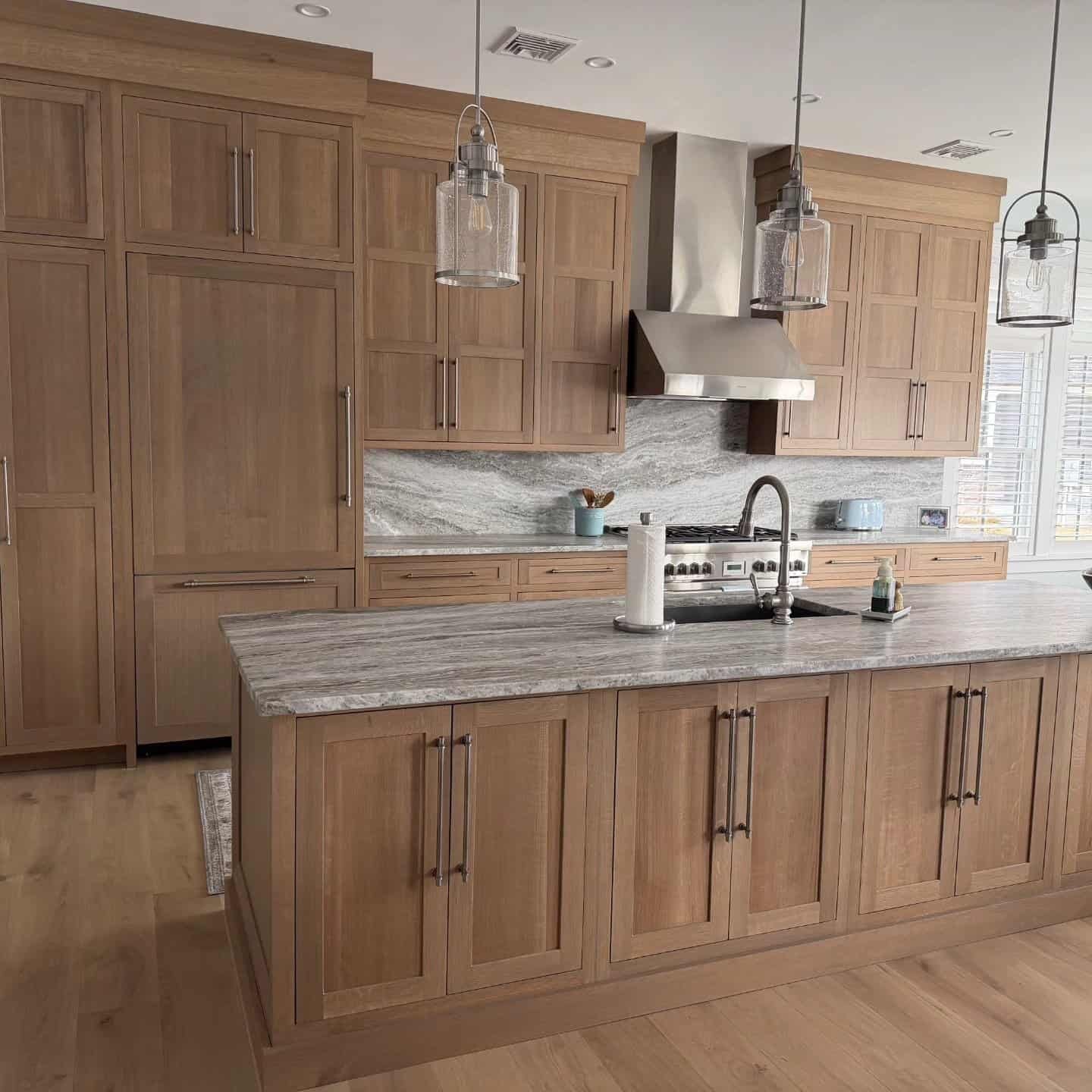
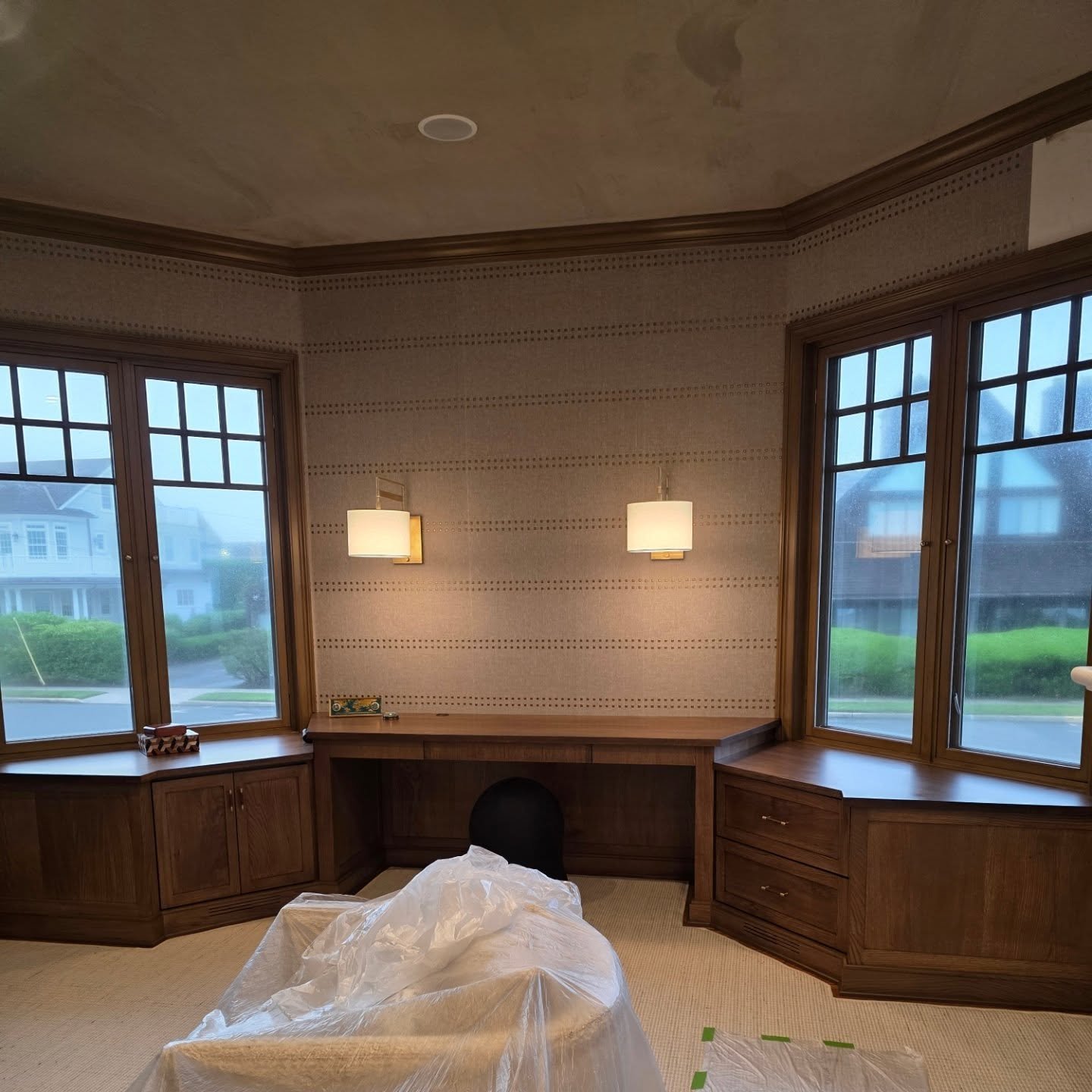
Our finishing room

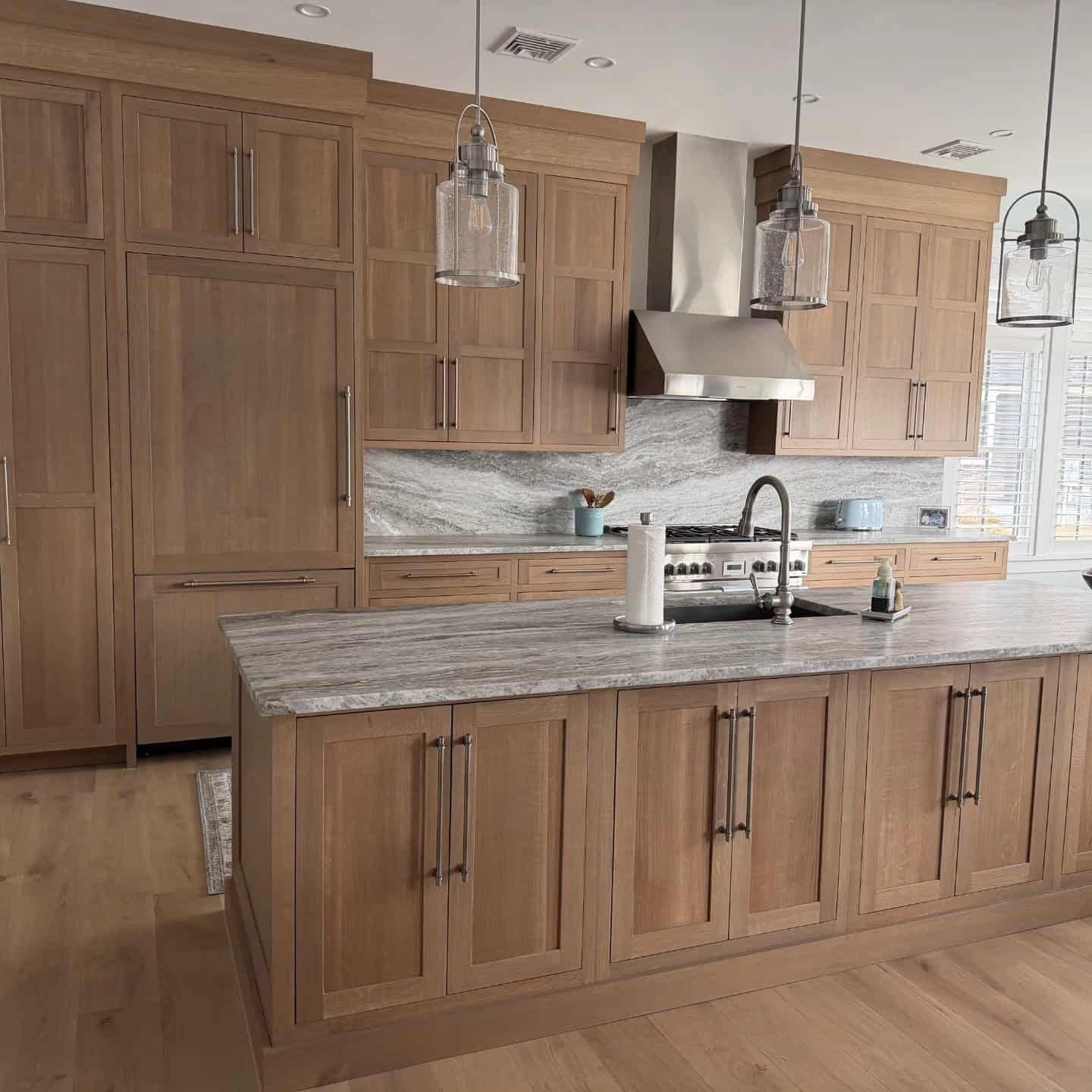
Rift cut white oak kitchen cabinets built in Pennsylvania by Choice Custom Cabinetry
Rift cut white oak: straight, quiet, modern
White oak built-in desk at a bay window, custom home office Pennsylvania
White oak built-in desk from our bay window project
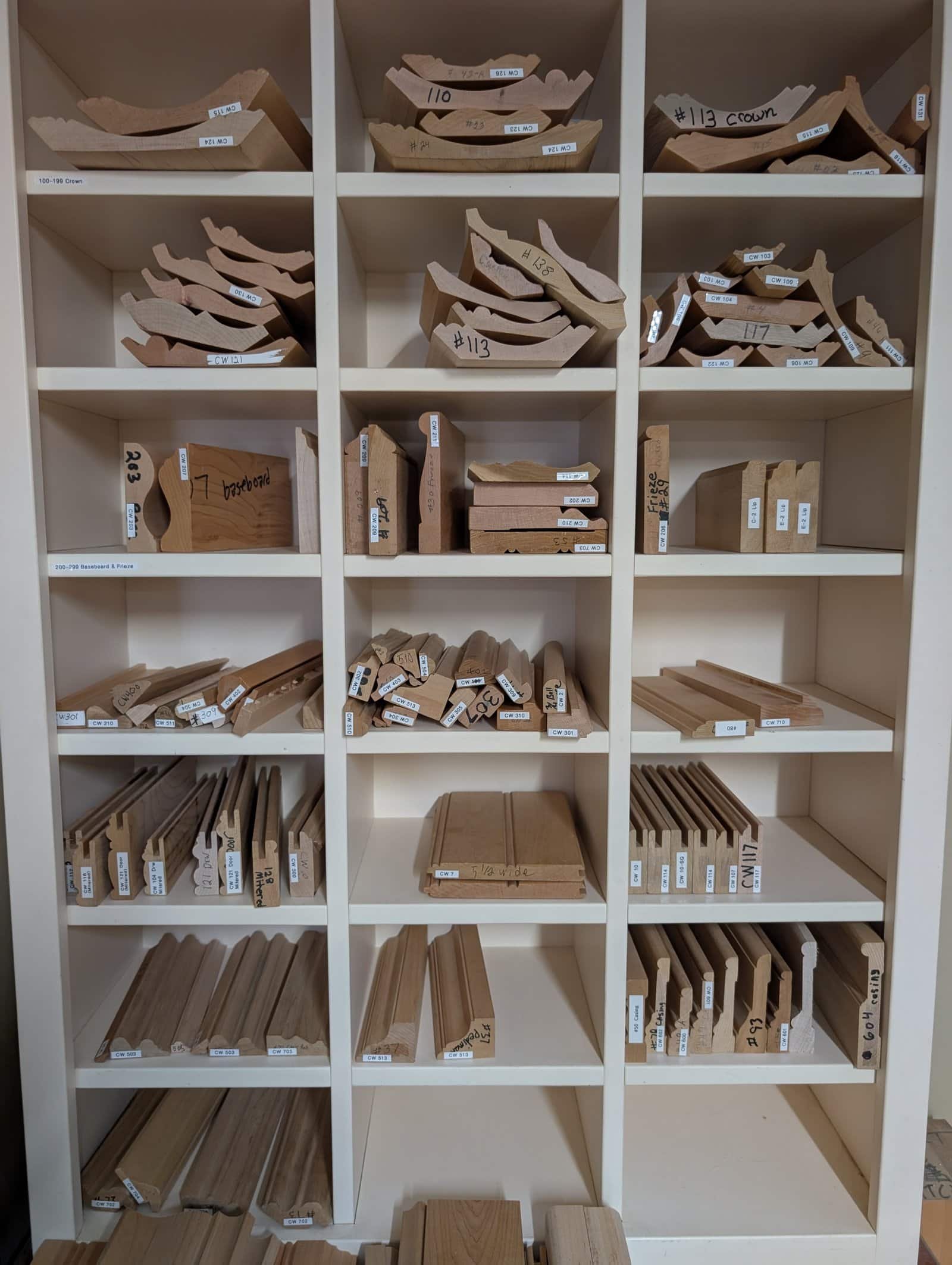
Rift cut white oak crown molding profiles milled in house
Profiles milled in-house from rift stock

Where Each Cut Belongs
Choosing Between Rift, Quarter Sawn, and Plain

Rift Cut
Modern
Straightest grain, minimal figure. The default for contemporary kitchens, floating vanities, and anywhere pattern should whisper.
Quarter Sawn
Craftsman
Straight grain plus ray fleck. The arts and crafts look: mission furniture, bungalow kitchens, libraries with history.
Plain Sawn
Traditional
Cathedral grain, the familiar oak. Right for rustic and traditional rooms, and the efficient use of the log.
Mixed, Deliberately
Designer move
Rift on doors and drawers, plain sawn inside panels. Cut selection by component is a custom-shop advantage no catalog offers.
Cerused and Fumed
Finishes
Quarter sawn oak takes cerused (limed) and fumed finishes like no other wood, the pores and fleck carry the effect.
Beyond Kitchens
Whole house
Desks, bookcases, vanities, and media walls in matching cut and finish.

White oak custom kitchen detail with natural finish, Amish-made in PA
Natural finish lets the cut speak
Custom white oak cabinetry with integrated appliances, Pennsylvania
Integrated panels in matched grain
White oak kitchen with stone countertops built by Amish craftsmen
White oak with natural stone, the current classic

Practical Advice
Getting Oak Right

1
Approve grain on real boards, not photos
We lay out your actual door fronts before assembly. Ray fleck density varies board to board; you should see yours.
2
Think about sheen early
Low-sheen finishes make rift oak look natural and expensive. High gloss fights it. Our standard is a matte conversion varnish that resists water without plastic shine.
3
Pair hardware to the grain
Slim pulls in brass or black suit rift oak’s straight lines. Ornate hardware belongs on quarter sawn craftsman work instead.
4
Budget the cut where you see it
Rift and quarter lumber costs more than plain sawn because the sawing wastes more log. Spend it on doors and visible ends; interior components do not need it. We engineer exactly that way.

Questions
Frequently Asked Questions
Honestly, it depends on more variables than any web page can price: the wood species, the finish, the door style, how much of the room is cabinetry, and the condition of the walls we are building against. Two kitchens of the same size can land far apart. We explain the methodology in our kitchen cost guide, and the fastest way to a real number is a free consultation with your measurements.
Oak has rays that run from the center of the tree outward. Quarter sawing slices along them, exposing shimmering ribbons across the straight grain. It is not a defect and not applied; it is the tree’s own structure made visible.
Rift oak is lighter, harder, and calmer; walnut is darker and more dramatic. Light-filled rooms take either; smaller or darker rooms usually favor oak. We will show both side by side in the showroom.
Under quality UV-inhibiting finishes, very little. It warms slightly and evenly. The orange tone people fear comes from old oil finishes on red oak, a different wood and a different era.
Yes. Matching fumed and aged quarter sawn tones is careful finishing work we genuinely enjoy. Bring a drawer or a clear photo and we will build a sample door first.


See the Cuts Side by Side

We keep rift, quarter sawn, and plain sawn samples in the showroom for exactly this comparison. Ten minutes with them beats ten hours online.