Honey Brook, PA · Since 1979

Painted & Two-Tone
Kitchens That Last

Color is the easy part. Making paint survive a working kitchen for decades is the craft. Sprayed conversion varnish on solid wood, tinted to anything.

45+
Years Building
100%
Solid Hardwood
Any
Color Match
Free
Consultation
Home  /  Custom Cabinetry  /  Painted & Two-Tone Kitchens

The Finish
Why Our Painted Cabinets Do Not Chip Like Painted Cabinets

Most painted-cabinet horror stories share one cause: wall paint on kitchen furniture. Brushed latex, even the best, was never designed for slammed drawers and steam. Our painted finish is catalyzed conversion varnish, tinted to your color and sprayed in a controlled finishing room, then cured into a shell that behaves more like a factory piano finish than like paint.

The substrate matters as much as the coating. We paint over solid hardwood and quality plywood, woods chosen for tight grain, like poplar and maple. Painted MDF, the industry default, cracks at every joint the first dry winter and swells at the first leak. Color can come from anywhere: bring a Benjamin Moore chip, a fabric swatch, or a photo, and the finishing room matches it.

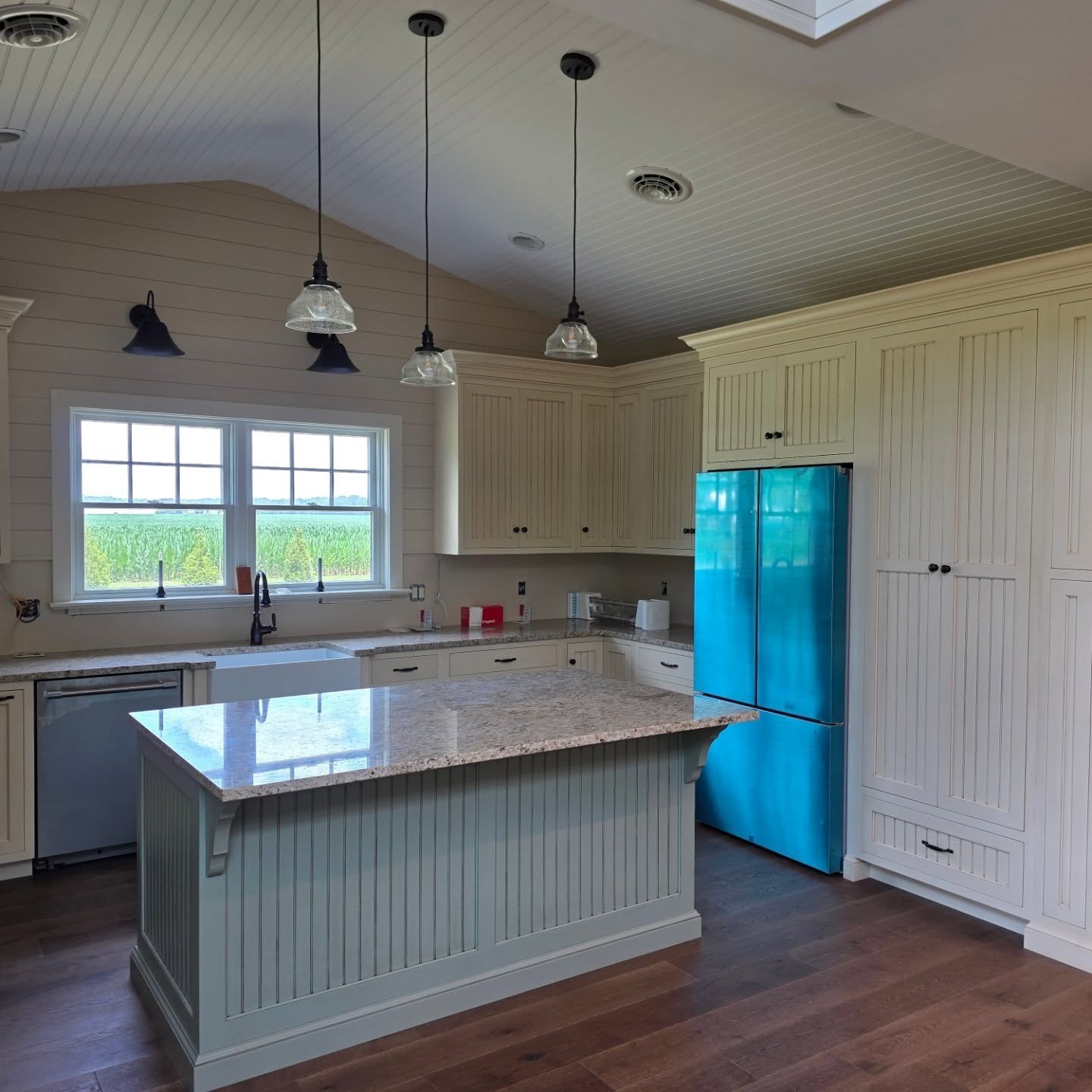
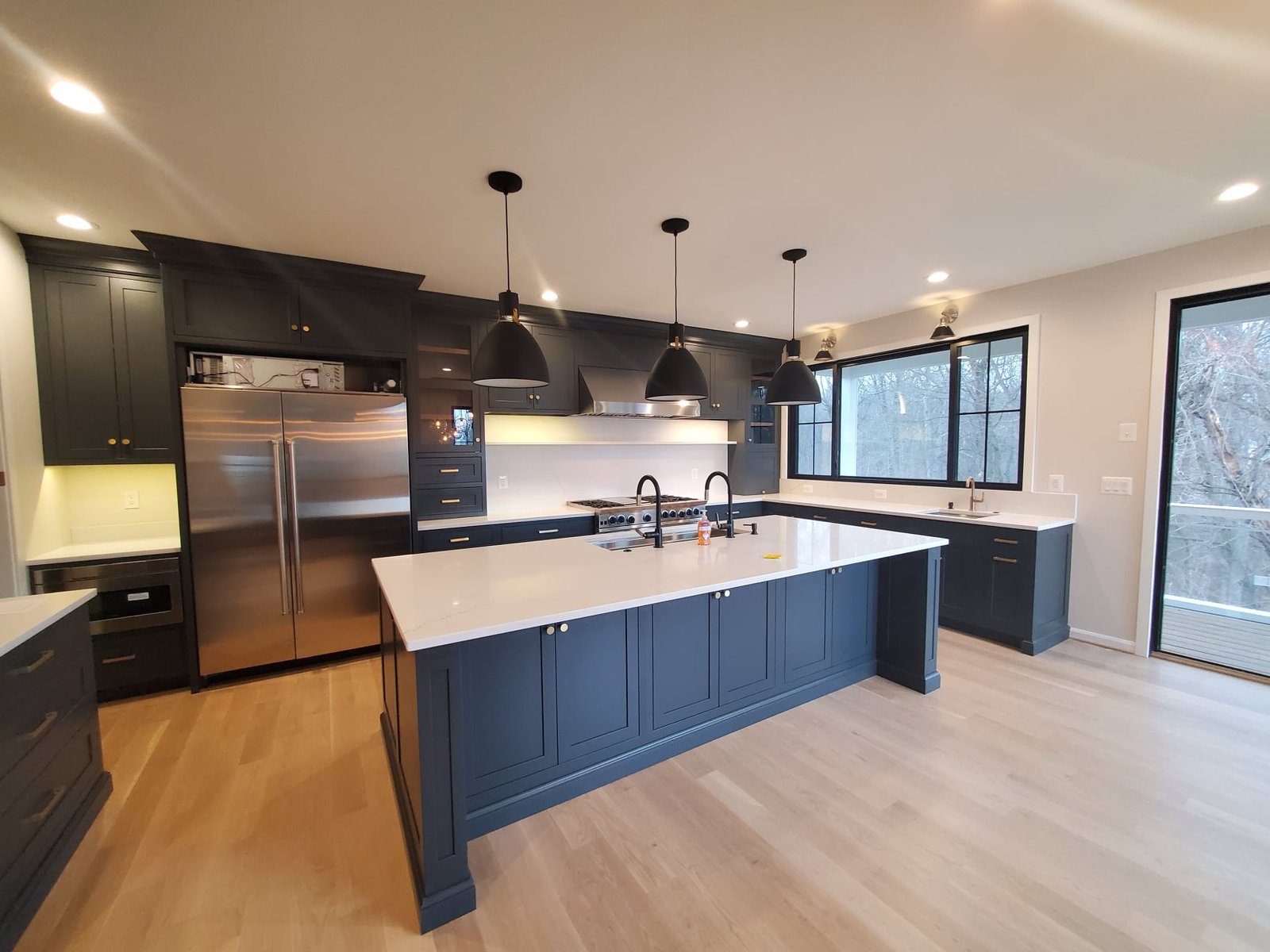
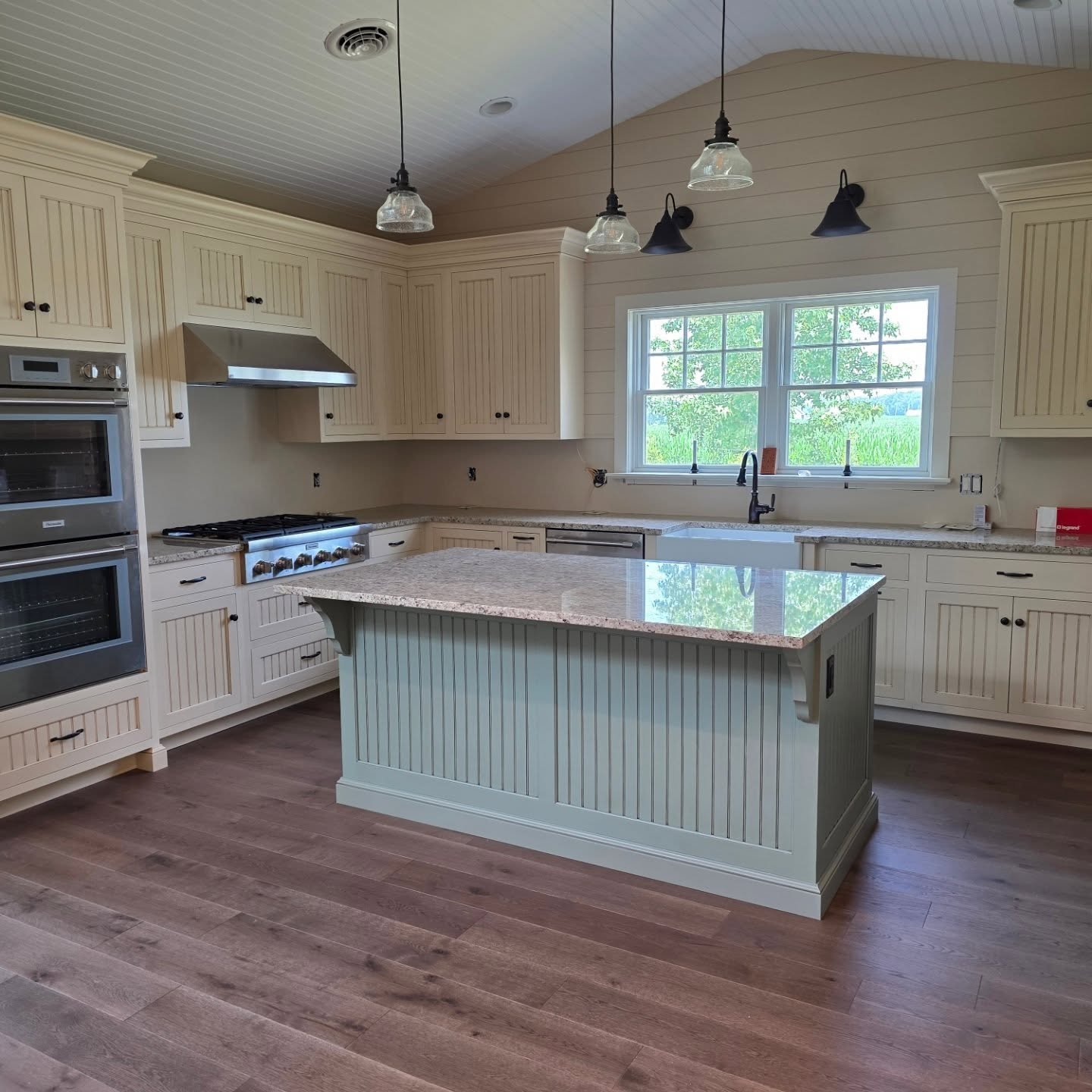
Recent painted work includes our soft green beadboard kitchen, the navy kitchen in Towson, and the terracotta kitchen, three very different rooms, one finishing standard.

“Clients apologize for bringing bold colors, and they should not. A deep green or navy in conversion varnish looks better in year ten than builder white in year three, because dark colors on solid wood age like furniture. The color you love is the right color.”
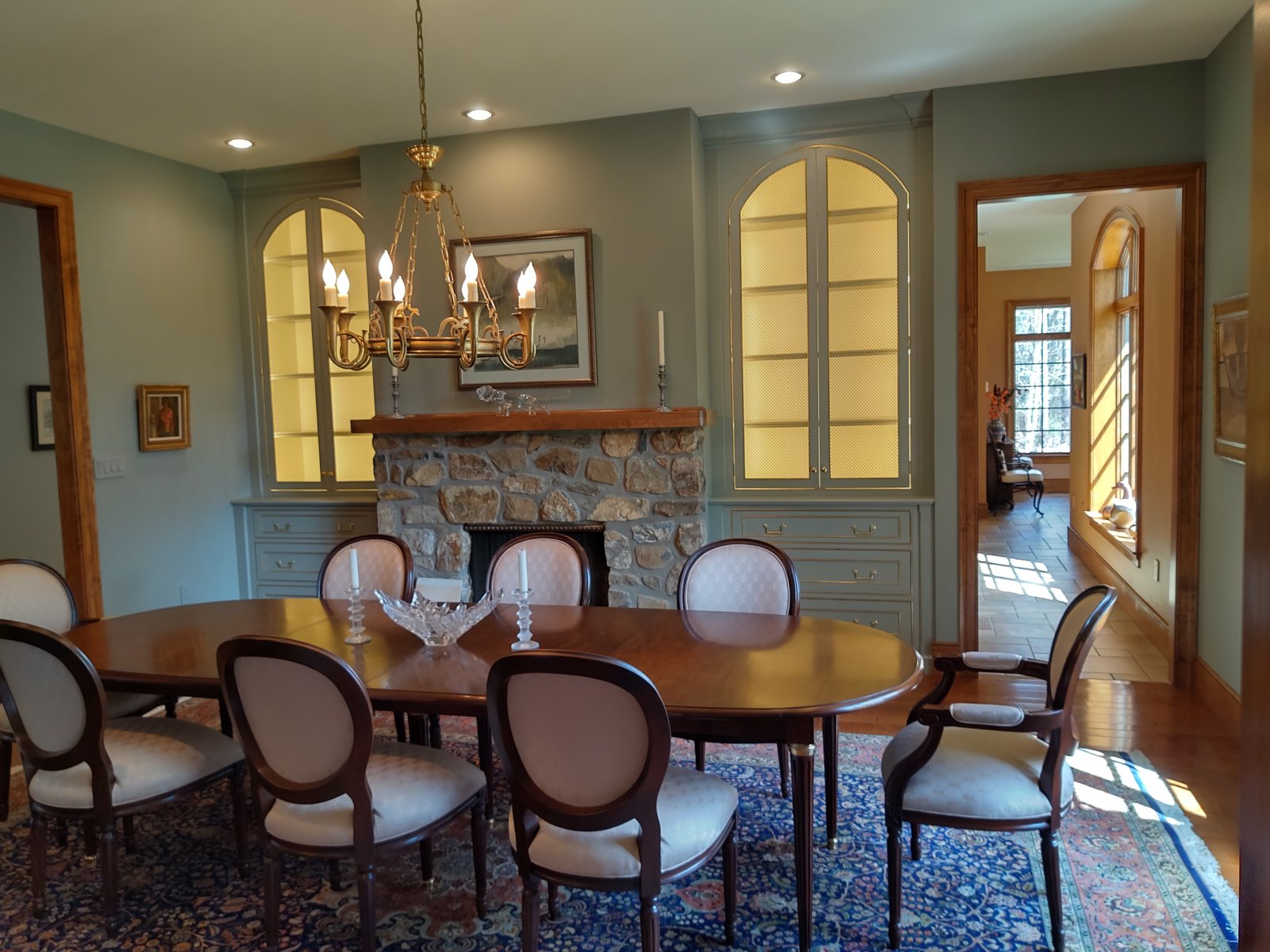
Our finishing room

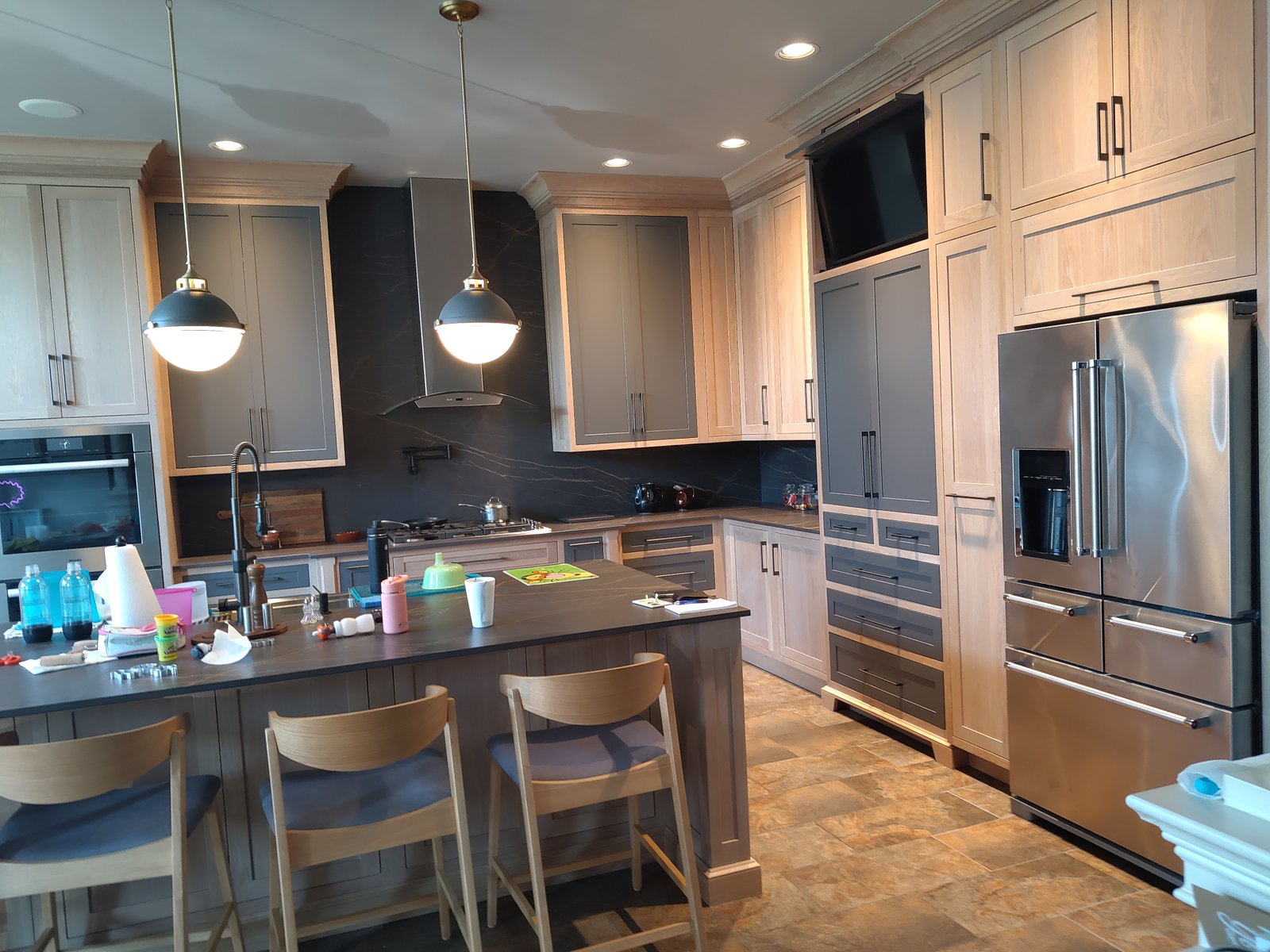
Two tone kitchen with painted perimeter and natural wood island, Pennsylvania
Two-tone: painted perimeter, natural wood island
Soft green painted kitchen cabinets with beadboard, custom built in PA
Soft green with beadboard, from a recent project
Navy blue painted custom kitchen cabinets with brass hardware
Navy and brass, the Towson kitchen

Color Strategy
How Two-Tone Kitchens Actually Work

Two-tone is not two random colors. The schemes that age well follow a few quiet rules:
1
Weight goes low
Darker or wood tones on the island and lowers, lighter on the uppers. The room feels grounded. Reverse it and the ceiling presses down.
2
One of the two should be calm
Color plus wood works. Color plus color works when one is nearly neutral. Two saturated colors compete for the room and both lose.
3
Repeat each tone once elsewhere
The island color returns in a hood band or open shelf brackets; the perimeter tone returns in the pantry or banquette. Rooms read as designed instead of assembled.
4
Sample in your light, always
The same green is sage at noon and gray at dinner. Kitchen planning guidance from the NKBA says the same about every finish decision. We spray real sample doors in your chosen color, and you live with them for a week before we commit a kitchen to it.

Natural wood and paint two tone custom kitchen detail
Where the two tones meet, the reveal must be perfect
Green painted kitchen detail with custom range area, PA cabinet shop
Color carries the room’s character
Navy painted kitchen island with seating, custom built in PA
Dark islands hide life and anchor seating

Living With Paint
Touch-Ups, Wear, and Honest Expectations

The honest part nobody puts on brochures: every painted kitchen, ours included, will someday get a chip at the trash pull-out or the dishwasher corner. The difference is what happens next. Conversion varnish chips stay local, they do not peel in sheets, and we keep your exact tint formula on file for as long as the kitchen lives, so a touch-up kit or a crew visit restores it invisibly. Wood-grain kitchens hide wear even better, which is why hard-use households sometimes pair a painted perimeter with a hickory or white oak island where the real abuse happens. Style logic for the frames themselves lives on our shaker page.


Questions
Frequently Asked Questions
Honestly, it depends on more variables than any web page can price: the wood species, the finish, the door style, how much of the room is cabinetry, and the condition of the walls we are building against. Two kitchens of the same size can land far apart. We explain the methodology in our kitchen cost guide, and the fastest way to a real number is a free consultation with your measurements.
Yes. We match Benjamin Moore, Sherwin-Williams, Farrow and Ball, or a photo of your grandmother’s hutch. The tint goes into conversion varnish, so you get the color you chose with durability no wall paint offers.
Whites and soft neutrals are the low-risk answer, and there are dozens of good ones. That said, well-executed color photographs beautifully in listings. Choose for your years in the house, not the last month of it.
Slightly, and we plan for it. Natural wood mellows warm; quality paint holds steady. The pairings we recommend look better as that happens, not worse.
If the boxes are solid wood or plywood and worth the investment, sometimes yes, honestly, sometimes no. We will look and tell you which, even when the answer costs us the job.


Test Your Color on a Real Door

Bring the chip you keep coming back to. We will spray it on a sample door so you can live with it for a week before deciding. That is how confident choices happen.