There’s something timeless about walking into a space that’s built not just for storage, but for experience. Most people think about kitchens and bathrooms when they consider a cabinetry renovation. But some of the most satisfying projects we work on are the ones that go a little further: a dedicated wine room in the basement, a home bar tucked into a finished lower level, or a glass-front wine display built into a dining room wall.
These spaces are different from a kitchen cabinet run. They are designed around a specific activity and a specific mood. Getting them right means thinking about how the space will actually be used, what it needs to store, and how it should look at 10 o’clock on a Saturday night with guests around. That is a different design problem than maximizing kitchen storage, and it is one we enjoy solving.
We build custom wine cellars and home bars out of our Honey Brook, Pennsylvania facility, using the same solid hardwood construction and hand-fitted joinery that goes into every other piece we make. No MDF, no flat-pack. Everything built from scratch for your space.
Custom Wine Cellars: What to Think About Before You Build
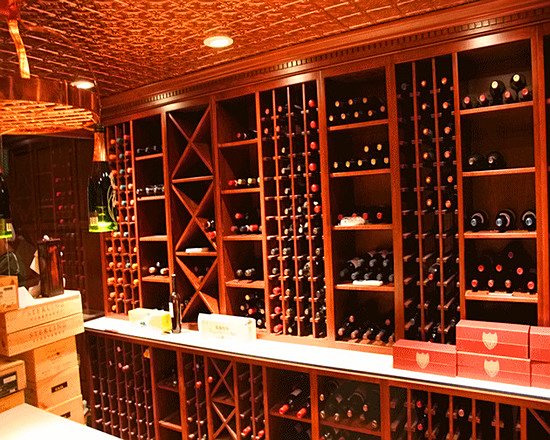
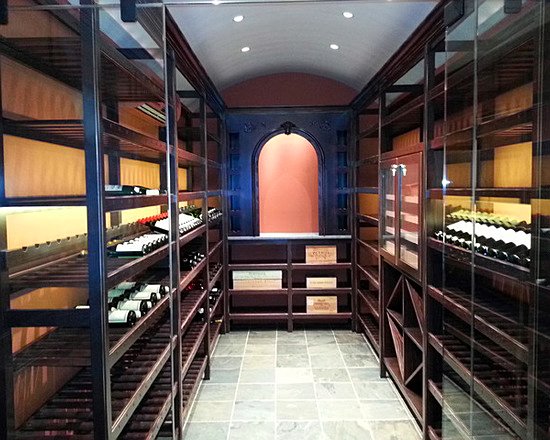
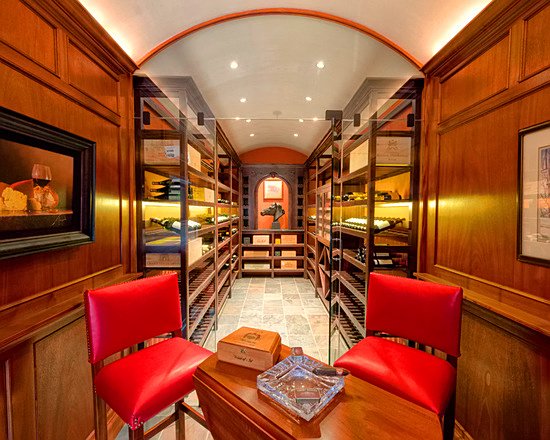
A wine cellar is one of those projects where the functional requirements and the aesthetic ones pull in opposite directions. Wine storage needs stable temperature and humidity, good airflow, and bottles stored at the right angle so the cork stays moist. At the same time, most homeowners want the cellar to look beautiful, especially if it has a glass wall or door that is visible from a living area.
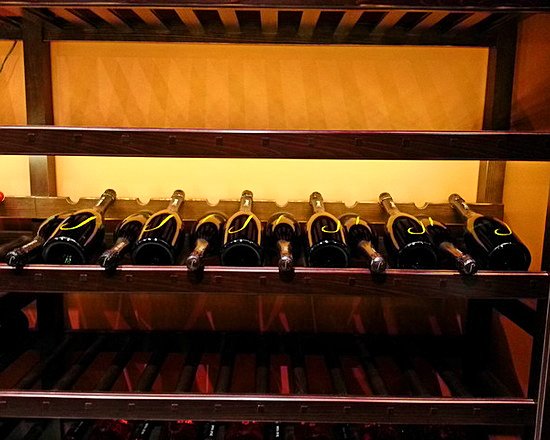
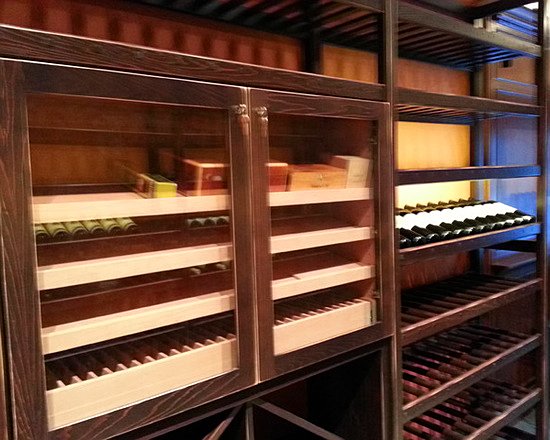
We handle both sides of that. The cabinetry we build provides the structure: solid wood racks, display sections with angled bottle slots, enclosed storage for cases, and trim details that make the room feel finished rather than utilitarian. The climate control side is handled by a separate contractor or the homeowner’s HVAC provider, but we design around it so the mechanical components integrate cleanly into the millwork.
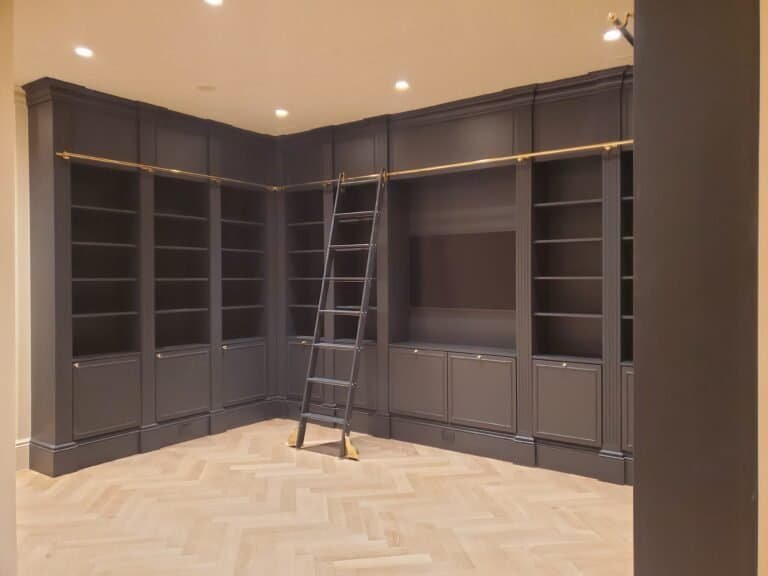
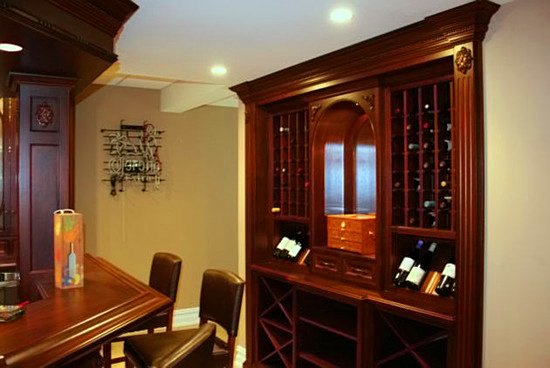
Styles we build range from traditional wine rooms with arched details, raised panel doors, and dark cherry stain, to contemporary display walls with frameless glass doors and integrated LED strip lighting. The most common request we get from homeowners across Lancaster County, Chester County, and the Philadelphia suburbs is something in between: warm wood tones, clean lines, and lighting that makes the bottles look good without being theatrical about it.
Under-stair wine storage is also worth considering if you have an open staircase and an unused triangular space beneath it. We have built several of these in homes throughout southeastern Pennsylvania and they consistently become one of the most talked-about features of the house.
Custom Home Bars: Built for How You Actually Entertain
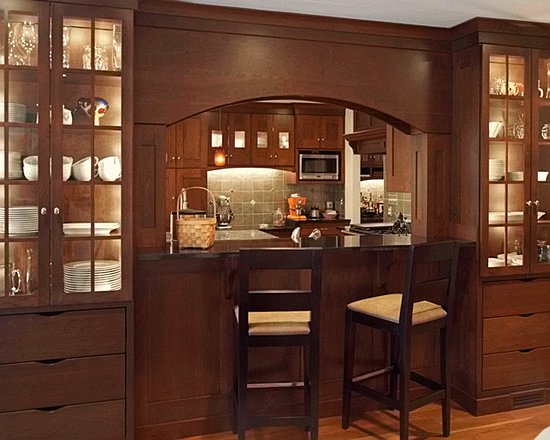
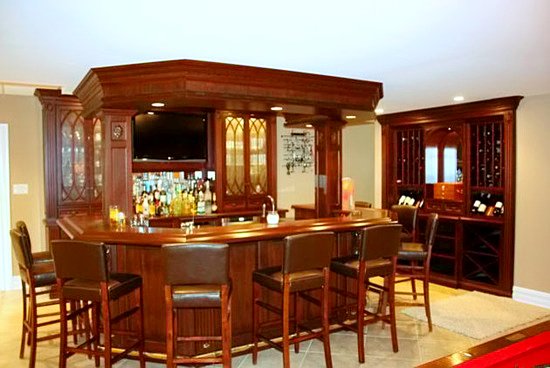
There is a wide range of what “home bar” can mean. At the simple end, it is a dedicated cabinet run with a countertop, some bottle storage, and a small fridge. At the other end, it is a full wet bar with a sink, under-counter refrigeration, a glass rack, a back bar with a mirror, and custom lighting that you can dial up or down depending on the occasion.
We build across that whole range. The most important conversation we have with clients before starting a bar project is about how they actually use it. Do they need a sink, or just a prep surface? Will guests be standing at the bar, or is it more of a service station for a dedicated entertainment room? Is the bar the focal point of the room, or is it something that should blend into the wall when not in use?
The answers shape every decision: how much counter depth makes sense, whether glass-front cabinets above are worth it, how much drawer storage is needed for tools and accessories, and whether integrated lighting should be subtle ambience or a real design statement.
Popular build combinations we see in Pennsylvania homes include:
- Dark walnut or cherry bar cabinets with a quartz or butcher-block top and brass hardware, often in a traditional or transitional home
- Painted white or navy frameless cabinets with an open shelf section and a waterfall-edge stone counter, common in more contemporary finished basements
- Built-in bar with back bar mirror, glass rack above, and integrated lighting, designed to look like a professional installation rather than a piece of furniture
- Combination wine-and-bar unit where one side is dedicated wine rack storage and the other is a bar prep area, separated by a display section with LED backlighting
For a look at a recently completed bar project, see our custom dark walnut bar and storage build, which shows how dark wood tones and built-in refrigeration work together in a finished basement.
Wood, Finish, and Hardware: Making the Choices
Wine cellars and home bars have more latitude for bold material choices than kitchens do. A kitchen needs to be practical above everything else. A bar or wine room is partly about atmosphere, which means you can lean harder into a specific aesthetic without worrying about whether it will feel dated in five years.
For stained finishes, the most requested species for bar and wine projects right now are walnut and cherry. Walnut has a richness and depth that photographs well and ages gracefully. Cherry is warmer and develops a beautiful patina over time as it darkens with exposure to light. Both are significantly more distinctive than oak for this type of project.
For painted finishes, deep tones work well: forest green, navy, charcoal, and black are all popular for bar cabinetry because they signal that the space is dedicated and intentional rather than an extension of the kitchen. We apply these in a matte conversion varnish that is durable enough for a high-use surface.
Hardware selection matters more in a bar or wine room than in most other spaces because the scale is smaller and everything is at eye level. We recommend spending more on hardware here than you might elsewhere. A quality brass or unlacquered bronze pull on a dark walnut cabinet makes a different impression than a brushed nickel equivalent, and in a room that is all about mood, those details add up.
You can learn more about our construction methods and available door styles, or come see finished examples in different materials at our Honey Brook showroom.
For wine storage design ideas beyond cabinetry, Wine Enthusiast has a practical guide to home wine cellar planning that covers temperature zones, capacity planning, and layout considerations worth reading before you commit to a design direction.
Lighting in Wine and Bar Spaces
Lighting does more work in a wine cellar or home bar than in almost any other room in the house. In a kitchen, the goal is even, shadow-free task lighting. In a bar or wine room, the goal is something more specific: you want the bottles to glow, the glassware to sparkle, and the wood to look warm without the whole space feeling like a grocery store wine aisle.
We rough in LED lighting during construction so there are no visible cords or retrofitted fixtures. Common placements include LED strips along the underside of shelves above bottle storage, recessed puck lights inside glass-front display cabinets, and low-voltage accent lighting along the top of a back bar section. We also integrate under-counter lighting when there is knee space on the bar side, which creates a floating effect that photographs very well.
All of our LED installations use warm white (2700K to 3000K) unless a client specifically requests otherwise. Cool white in a wine room makes the wood look flat and the space feel clinical. Warm light is almost always the right choice here.
Where We Work
Our shop is in Honey Brook, Pennsylvania, which puts us within easy reach of most of southeastern and central Pennsylvania. We regularly build and install wine cellars and home bars for homeowners across Lancaster County, Chester County, Berks County, Delaware County, Montgomery County, and the Philadelphia area. We also serve clients in Maryland and New Jersey on larger projects.
If you have a basement renovation or addition planned and want to include a wine room or bar, the best time to talk to us is before the framing goes up, not after. Rough-in decisions like drain location for a wet bar, blocking for heavy wall-mounted storage, and electrical for under-counter refrigeration are much easier to handle during construction than as a retrofit. We are happy to consult with your contractor or builder during the planning phase at no charge.
See more of our work across different project types in our full gallery, or read about the history of our shop and the craftsmen who build every piece.
Questions We Hear Most Often
Do you build the climate control system for the wine cellar, or just the cabinetry?
We build the cabinetry and millwork. Climate control, meaning the cooling unit and insulation, is handled separately, either by the homeowner’s HVAC contractor or a specialist. We design the millwork to integrate cleanly with whatever cooling solution you choose, and we can coordinate with your contractor during the design phase to make sure everything lines up. If you need a referral, we can point you toward people we have worked with on past projects in the Lancaster and Chester County area.
How much does a custom home bar cost?
A simple bar cabinet run with countertop and basic storage starts around $3,000 to $5,000 installed. A full wet bar with a sink, under-counter refrigeration, back bar, mirror, and custom lighting can range from $8,000 to $20,000 or more depending on materials, square footage, and finish level. The best way to get a real number is to request a quote with your room dimensions and a general sense of what you want the space to do.
Can you match the bar cabinetry to other cabinets in the house?
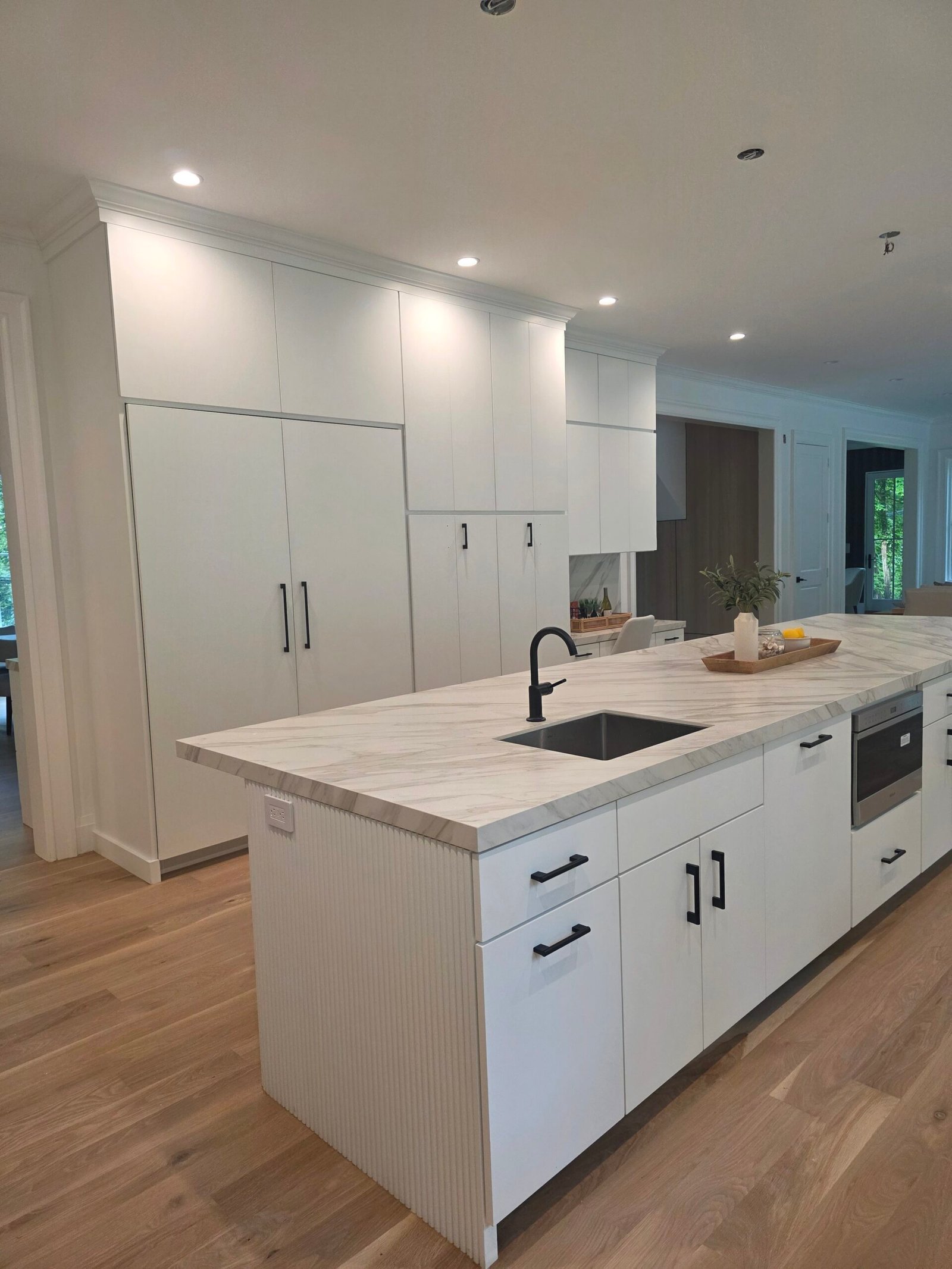
Yes. If you have existing cabinetry in the kitchen or elsewhere that you want to match, bring photos and any finish information you have. We can usually match door profiles, finishes, and hardware to maintain consistency throughout the home. We can also intentionally contrast the bar from the kitchen if you want the entertainment space to feel like a separate room with its own identity.
How long does a wine cellar or bar project take?
From approved design to completed installation, most bar and wine projects take 8 to 10 weeks. Larger or more complex wine rooms with significant millwork can take 10 to 14 weeks. We give you a specific timeline during the design phase once we know the scope. Visit our showroom or contact us to start the conversation.
Can you add a wine cellar or bar to an existing finished basement?
Absolutely. Retrofitting a bar into a finished basement is one of the most common requests we get. We assess the space during the consultation, identify any structural or electrical considerations, and design the cabinetry to work within what is there. Wet bars with sinks in a retrofit situation require a drain connection, which we coordinate with a plumber. Dry bars are considerably simpler and can usually be installed without any structural work.
Start Planning Your Wine Cellar or Bar
Whether you are working from a clear vision or just starting to think about what the space could be, a conversation with our design team is the right first step. We offer free consultations at our Honey Brook showroom and can visit your home for larger projects.
We work with homeowners throughout Lancaster, Chester County, Philadelphia, Berks County, and beyond. Request a free quote online or call us at (610) 273-2907 to get started.
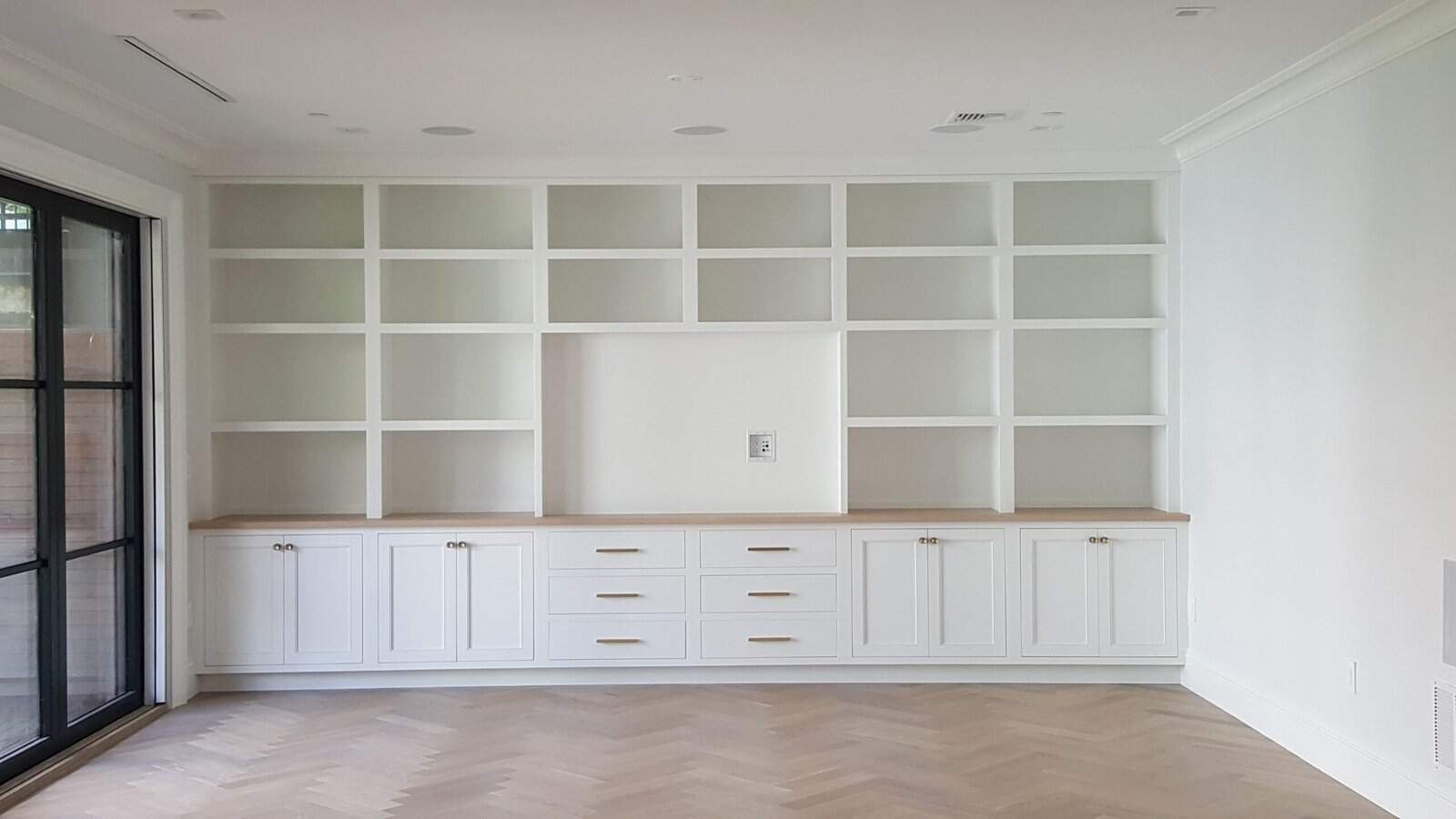
You can also browse our full range of cabinetry services or see how our entertainment center and living room built-ins come together for other ideas in the same spirit.
Ready to build one? Our wine cellar and home bar cabinetry page covers formats, woods, and honest pricing.