White oak has been the most requested wood species in our shop for the past two years. That is not a coincidence. It photographs beautifully, ages well, and works in almost any kitchen style from traditional farmhouse to clean contemporary. And compared to some of the trendier options that come and go, white oak has roots in American furniture and cabinetry going back centuries. It is not going anywhere.
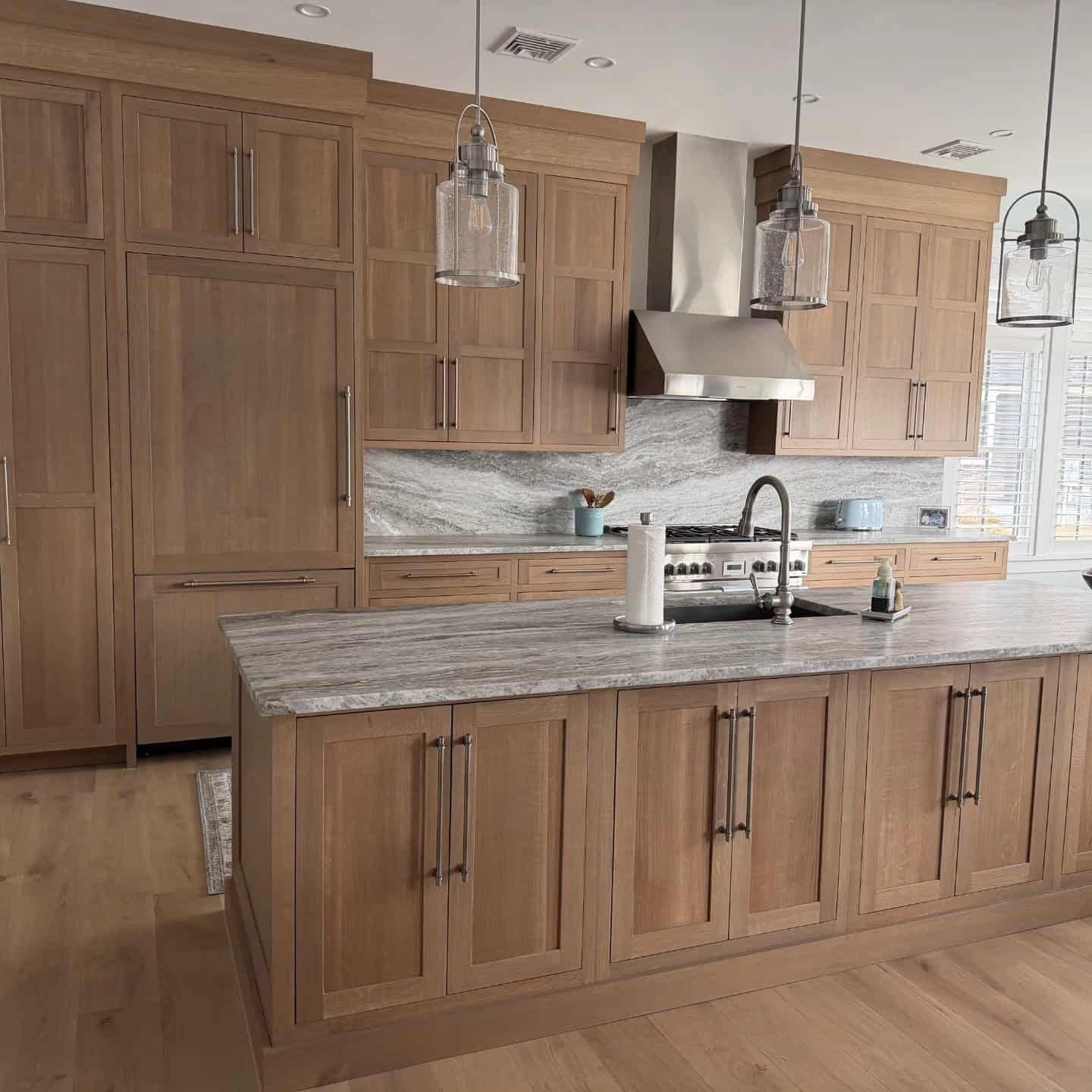
The kitchen in the photo above is a recent project we completed for a homeowner in Pennsylvania. Rift-cut white oak throughout, shaker-style doors, integrated refrigerator panel, natural stone countertops with a full slab backsplash, and brushed nickel hardware. The result is a kitchen that feels warm and substantial without being heavy or dark.
If you are considering white oak for your kitchen renovation, this post covers everything you need to know before you decide: the difference between rift-cut and quarter-sawn, how to choose a finish, what the wood looks like over time, and why white oak works especially well in Pennsylvania homes across Lancaster County, Chester County, and the Philadelphia area.
What Makes White Oak Different from Red Oak
Most people who grew up with wood kitchen cabinets grew up with red oak. It was the dominant species in American kitchens from the 1980s through the early 2000s, and there is nothing wrong with it. But white oak is a different material with different characteristics, and the differences matter when you are choosing something that will be in your kitchen for 20 or 30 years.
White oak is harder than red oak by a meaningful margin. It is more resistant to denting and scratching, which matters on a kitchen island that takes daily abuse. It also has tighter, more consistent grain when properly cut, and it accepts stain more evenly because the wood’s pores are smaller and more closed.
The grain pattern is the most visible difference. Red oak has an open, pronounced grain that can feel busy in a contemporary kitchen. White oak, particularly rift-cut white oak, has a fine, linear grain that feels quieter and more refined. It reads as natural without competing with other elements in the room.
White oak also has a naturally cooler, more neutral tone than red oak, which sits in the warm-amber zone. That neutral base is part of why it works with so many countertop and hardware choices: gray stone, white quartz, warm granite, brushed brass, matte black, brushed nickel — all of them pair naturally with white oak without looking forced.
Rift-Cut vs Quarter-Sawn: Which One Is Right for Your Kitchen
This is the question we get most often from homeowners who have decided on white oak but are not sure how to specify it. Both are cuts from the same tree. The difference is the angle at which the log is sliced, and that angle changes everything about how the finished cabinet looks.
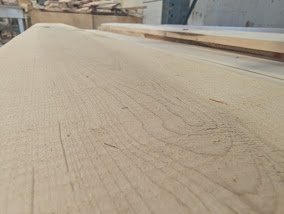
Rift-cut white oak
Rift-cutting produces a tight, straight vertical grain with minimal figure. The boards look consistent and linear, almost like a fine textile. This is the most popular option for kitchens right now because it reads as modern and clean without feeling cold. It works equally well in transitional, contemporary, and soft traditional kitchens.
The kitchen in the photo above uses rift-cut white oak. Notice how the grain runs consistently vertical across every door panel, creating a rhythm across the whole run of cabinetry. That consistency is only possible with rift-cut stock. Plain-sawn oak, by comparison, shows cathedrals and swirling grain that would read as chaotic at this scale.
Quarter-sawn white oak
Quarter-sawn cutting produces the famous “ray fleck” or “medullary ray” pattern that defines Arts and Crafts and Mission-style furniture. The grain shows silver flecks that catch the light and change appearance depending on angle and time of day. If your kitchen leans toward that aesthetic, or toward a warm craftsman style, quarter-sawn is worth the premium.
Quarter-sawn is also more dimensionally stable than rift-cut. It moves less with humidity changes over the seasons, which is a real advantage in older Pennsylvania homes where interior humidity can swing significantly between summer and winter.
We carry both in our shop and can show you samples of each at our Honey Brook showroom before you decide. There is no substitute for seeing the material in person under real light.
Natural, Stained, or Wire-Brushed: Choosing Your Finish
White oak looks exceptional in several different finish directions, and the choice changes the whole character of the kitchen. Here is how we think about each option.
Natural clear finish
A natural finish with a low-sheen conversion varnish lets the wood speak for itself. The cabinet shown in this project uses a natural clear finish with very slight warm undertones. Fresh white oak is light, almost blonde, and will warm slightly over time as it is exposed to light. If you want the kitchen to feel airy and fresh, natural is usually the right call.
Stained white oak
White oak takes stain very evenly, which makes it the preferred species for stained kitchens. Common directions right now include warm greige (gray-beige), cooler gray-brown, and deep tobacco brown. A slightly darker stain on rift-cut oak reads as sophisticated and grounded without being as heavy as walnut. We mix our own stains in our Honey Brook finishing department and can match virtually any color reference you bring in.
Wire-brushed or cerused finish
Wire-brushing opens the grain slightly and creates subtle texture on the surface. Combined with a contrasting tinted finish, this produces a cerused effect where the lighter color fills the grain lines and the surface takes on a dimensional quality. It is a more statement-forward choice than natural or standard stained, but in the right kitchen it is extraordinary. We have completed several wire-brushed white oak projects for homeowners in Chester County and the Philadelphia Main Line.
For more context on how different wood species and finishes look alongside each other in real projects, see our gallery. And if you want to understand how the wood species choice connects to the finish selection for crown molding and trim, our post on custom crown molding and wood selection covers the details.
How White Oak Ages in a Pennsylvania Kitchen
One of the best things about white oak as a cabinet material is how it behaves over time. Unlike cherry, which darkens dramatically in the first year, or painted cabinets, which show wear at edges and corners, white oak ages gradually and honestly. The color shifts toward a slightly warmer, more amber tone over years of light exposure, which most homeowners find appealing rather than alarming.
Pennsylvania’s mid-Atlantic climate is reasonably gentle for wood cabinetry. Summers are humid, winters are dry, and a well-built white oak cabinet with a quality conversion varnish topcoat handles that seasonal movement without issue. The key is in the construction: solid wood frames and doors that are engineered and fitted correctly will stay tight through seasonal cycles. Mass-produced cabinets with thin veneers over particleboard are far more vulnerable to the same humidity swings.
Our construction methods use solid hardwood throughout, with face frames hand-fitted and doors built to accommodate wood movement. That is why our customers in Lancaster County come back decades later and their cabinets still look right.
Why White Oak Works Particularly Well in Pennsylvania Homes
Pennsylvania has an extraordinary range of residential architecture. Lancaster County has traditional farmhouses and colonial homes. Chester County has Main Line estates and stone colonials. Philadelphia has rowhouses and townhouses from the 18th and 19th centuries. And throughout the region, there are newer builds trying to balance contemporary taste with respect for the surrounding context.
White oak works across all of these because it is neither aggressively modern nor period-specific. A rift-cut white oak kitchen does not look out of place in a farmhouse renovation in Coatesville, and it does not look out of place in a new build in Exton or Malvern either. The material has enough warmth to feel at home in traditional architecture and enough restraint to work in contemporary interiors.
It also pairs exceptionally well with the natural stone countertops and backsplash materials that are common in Pennsylvania renovation projects. Gray granite, quartzite, and soapstone all complement the cool-neutral base of white oak in a way that warmer woods like cherry or hickory would not.
For comparison, you can see how we used a similar warm-natural palette in a different direction in our timeless white kitchen project, and how strong color choices work in our navy kitchen project in Towson, MD.
For a broader look at how white oak is being used in kitchens nationally right now, Architectural Digest has covered the white oak trend extensively and gives good context for where the material sits in the wider design conversation.
Hardware Pairings That Work Best with White Oak
Hardware choice on white oak is not complicated, but it is worth thinking about deliberately because white oak is neutral enough that almost anything goes, which means the wrong choice looks careless rather than intentional.
The project in the photo uses brushed nickel bar pulls, which are a clean, classic choice that lets the wood be the primary material. They work because they are not competing for attention.
Other combinations that we see regularly and that hold up well over time:
- Unlacquered brass or satin brass adds warmth and a slightly more traditional or transitional feeling. It warms the natural tone of the oak without making it feel heavy.
- Matte black creates the sharpest contrast and reads as more contemporary. On rift-cut white oak it can look striking. It is less forgiving to fingerprints than brushed finishes.
- Oil-rubbed bronze works well in more traditional or craftsman kitchens, especially with quarter-sawn oak where the warm bronze picks up the amber in the ray fleck.
- Brushed or satin nickel, as shown above, is the safest and most versatile choice. It works in any lighting condition and never dates.
We have samples of hardware in all of these finishes at our showroom and can lay them against actual wood samples so you can see the combination in real light before committing.
How We Source and Build with White Oak
White oak is not a commodity material for us. We source selectively, specify the cutting method (rift or quarter-sawn), and let the lumber acclimate in our facility before it goes into production. This matters more than most people realize: white oak installed at the wrong moisture content will move after installation, and in a kitchen that means doors that stop hanging straight and joints that open slightly at the corners.
We build our white oak cabinets with the same construction standards as everything else that leaves our Honey Brook, Pennsylvania shop: solid wood face frames, hand-fitted joints, dovetail drawer boxes, and a conversion varnish finish that is significantly more durable than standard paint or oil finishes. The result is a cabinet that can be cleaned, lived with, and appreciated for decades without showing signs of compromise.
The full process from consultation to installation is covered on our how we work page, and you can read more about the people who build every piece on our about page.
Common Questions About White Oak Cabinets
Is white oak more expensive than maple or cherry?
White oak, particularly rift-cut and quarter-sawn grades, typically costs more than maple and is comparable to or slightly above cherry pricing. The premium reflects the selectivity of the cutting process and the lumber grade required to get consistent rift grain. That said, the price difference in the context of a full kitchen is usually not the deciding factor. Request a quote with your kitchen dimensions and we will give you specific numbers.
Will white oak cabinets yellow or change color over time?
White oak does shift slightly warmer over time with light exposure, but it does not yellow in the way that some species do. The change is gradual and most homeowners find it a natural and desirable part of the wood’s character. A UV-inhibiting topcoat can slow the shift if you want to preserve the initial blonde tone longer.
Do white oak cabinets work with white countertops?
Yes, very well. White oak with white quartz or white marble is one of the most popular combinations we see right now because the contrast is clear without being harsh. A warm-toned stone with movement, like the granite shown in the photo above, works equally well and adds depth to the pairing.
Can you match white oak cabinets to white oak flooring?
We can specify the cabinet wood to match or complement an existing white oak floor. An exact match is not always desirable since same-tone surfaces at different levels can flatten the room. More often we target a complementary tone, slightly lighter or darker, to create differentiation while keeping the material consistent. Bring a floor sample to the consultation and we will show you options.
Do you serve the Main Line and Philadelphia area for white oak kitchen projects?
Yes. We regularly build and install custom cabinetry across Chester County, Delaware County, Montgomery County, and Philadelphia, in addition to our Lancaster County home base. Distance from our shop in Honey Brook does not affect the build quality, and we have an experienced installation crew for out-of-county projects throughout southeastern Pennsylvania.
Start Your White Oak Kitchen Project
If you are drawn to natural wood kitchens and want something that will look better in ten years than it does on day one, white oak is worth a serious look. Come to our showroom in Honey Brook to see rift-cut and quarter-sawn samples in person, or request a free quote online to start the conversation.
We work with homeowners throughout Lancaster County, Chester County, Berks County, the Philadelphia suburbs, and into Maryland and New Jersey. Consultations are free and there is no obligation to move forward until you have seen the design and pricing in full.
You can also browse our full range of cabinetry services or explore more kitchen projects in our project gallery for more inspiration before you visit.