Designing a kitchen isn’t just about style — it’s about how the space works.
A beautiful kitchen loses its charm if drawers bump into each other or if there’s nowhere to prep food comfortably. The secret to a kitchen that feels both elegant and effortless is a well-planned cabinet layout.
Below we’ll break down the main ideas behind smart cabinet placement, share practical tips, and explore how semi-custom and fully custom cabinetry fit into modern design strategies.
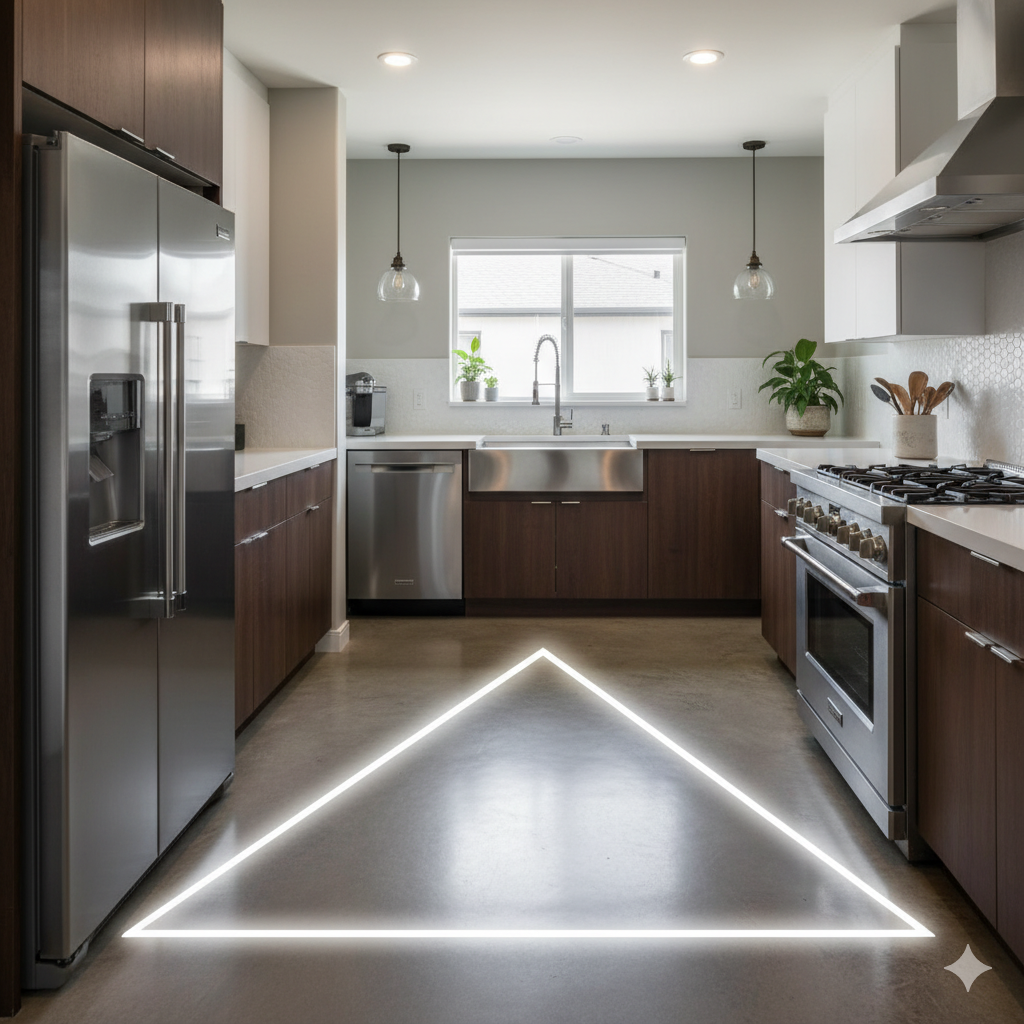
Start with the Kitchen Work Triangle
The foundation of every efficient kitchen is the work triangle — the distance between the sink, stove, and refrigerator.
Together they form the core of your daily routine, and ideally, the total distance between them should be 13 to 26 feet.
A few useful rules:
- Keep the sink in the center of the triangle — it’s the most used zone.
- Leave at least 36 inches of counter space between key stations.
- Avoid placing tall cabinets where they block the flow of movement.
Understanding Cabinet Zones
Every cabinet serves a purpose. Dividing the kitchen into functional zones helps maintain order and comfort.
Base Cabinets
These provide the main workspace. Keep drawers near the stove for utensils and deep drawers for pots and pans.
Common height: 34½ inches, depth: 24 inches.
Wall Cabinets
Best for light items — glasses, dishes, spices.
They typically sit 18 inches above the countertop and range from 30–42 inches in height.
Tall Cabinets
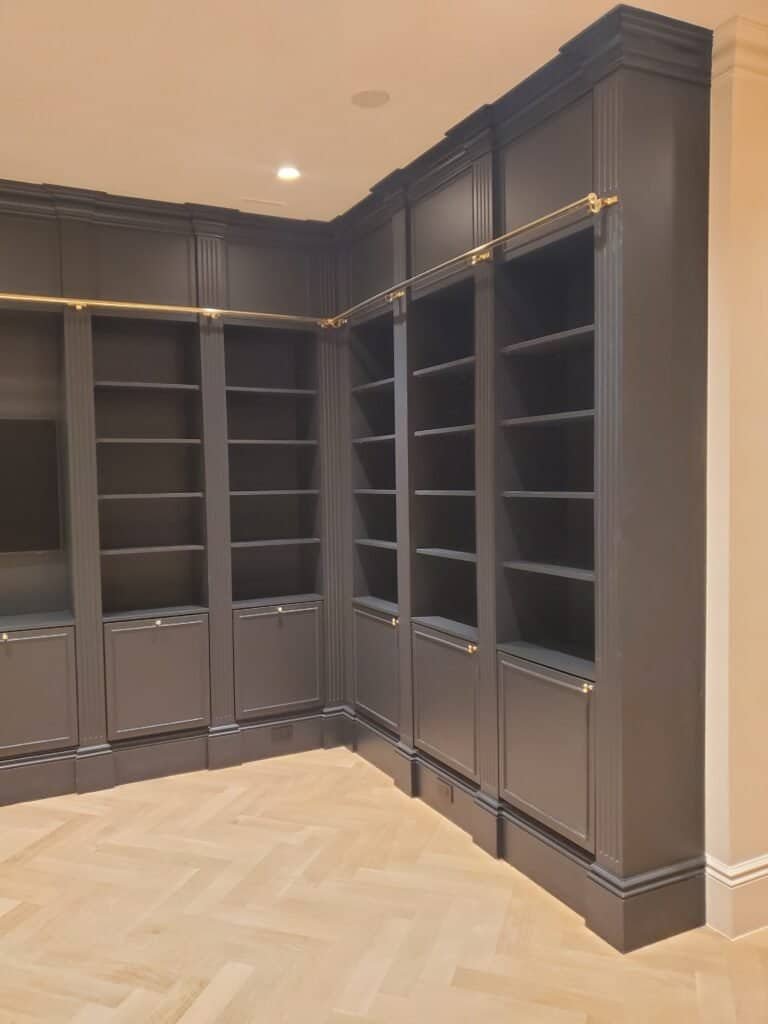
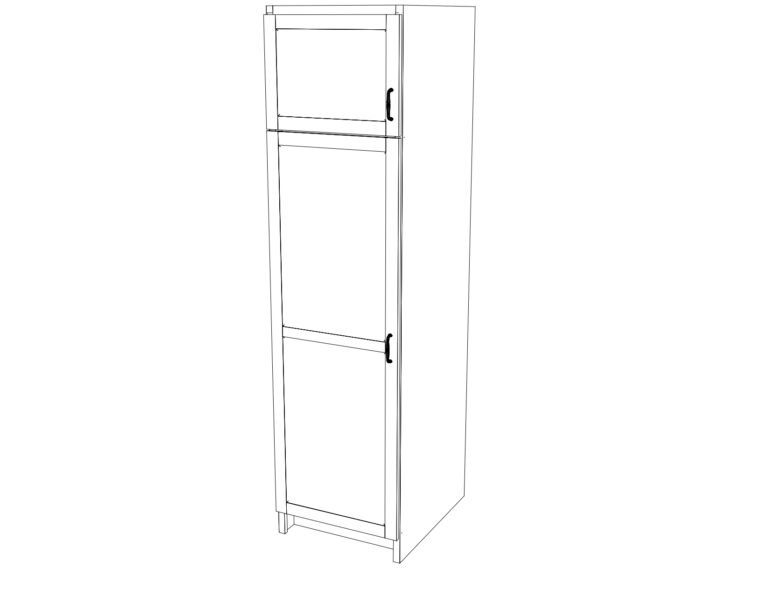
Used for storage or as pantries. They can run from 84 to 96 inches high, creating a built-in look that makes the kitchen feel cohesive.
Semi-Custom vs. Custom Cabinets — Finding the Right Fit
Semi-Custom Cabinets
Semi-custom cabinetry offers the perfect balance between flexibility and speed.
Cabinets come in 2-inch width and depth increments, allowing designers to fit most layouts without starting from scratch.
Benefits:
- Wide range of door styles and finishes
- Choice of any color from Sherwin-Williams
- Faster lead times and predictable pricing
- Great for remodels and builder projects
Fully Custom Cabinets
When every inch counts or the design calls for unique shapes and materials, custom cabinetry gives total freedom.
You can specify the exact dimensions, wood type, finish, and hardware — ideal for projects with detailed architectural requirements.
Both types can create beautiful results — it all depends on how much flexibility your project needs and how fast you want to move forward.
How to Visualize Your Space
Design tools and 3D drawings have changed how kitchens are planned.
Before any wood is cut, detailed layouts show how cabinets, appliances, and lighting interact in real scale.
It’s the best way to check proportions and fine-tune your workflow before committing to production.
For example, a small change in cabinet width or island position can dramatically improve circulation and comfort.
Final Thoughts — Balance, Beauty, and Function
When every cabinet has a purpose, the kitchen feels effortless.
Whether you’re renovating a compact space or designing a full chef’s kitchen, thoughtful planning ensures everything you need is exactly where you expect it to be.
If you’re exploring cabinet options, you can:
- Learn more about our approach at Choice Custom Cabinetry & Design
- Explore recent projects in our Gallery
- Or start with a free Project Estimate