In luxury kitchen design, square footage is valuable, but cubic footage is often overlooked. The most underutilized asset in your home is the space between the top of your door frames and the ceiling.
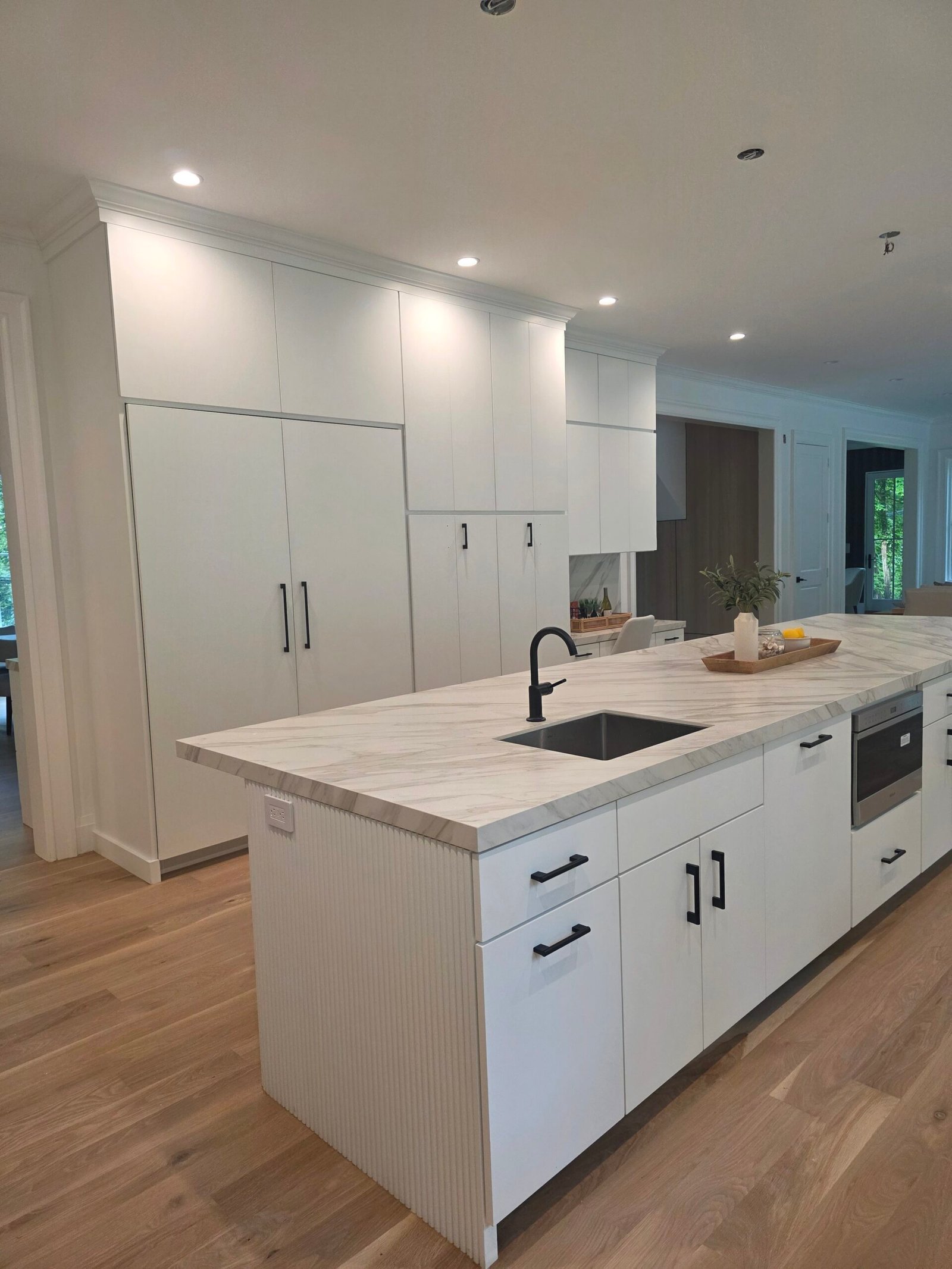
Extending cabinetry to the ceiling—known as vertical storage integration—is not just a visual trend. It is an ergonomic and architectural necessity for modern living.
At Choice Custom Cabinetry, we engineer storage solutions that respect the architecture of your home. Whether you choose our Full Custom or Semi-Custom lines, here is the technical breakdown of how to execute floor-to-ceiling designs correctly.
The Engineering Challenge: Ceilings Are Never Level
One of the biggest mistakes homeowners make is buying “standard” tall cabinets from big-box stores, assuming their 9-foot ceiling is exactly 108 inches high everywhere. It never is.
Settling foundations and drywall variances mean your ceiling height can fluctuate by ½ inch or more across a single wall.
The Expert Solution: Scribing & Two-Piece Crown
- How We Do It: We don’t just shove a cabinet against the ceiling. We utilize a two-piece crown molding system.
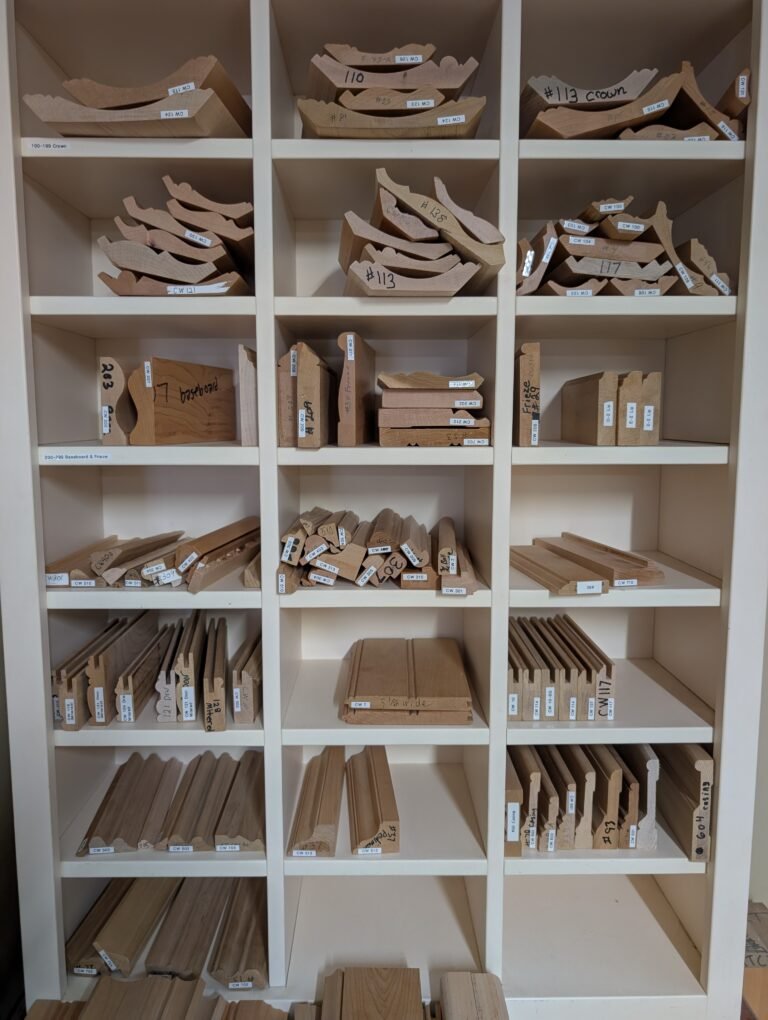
- The “Riser” (Frieze board): This flat piece of wood sits on top of the cabinet and is “scribed” (hand-cut) to match the wave of your ceiling perfectly.
- The Crown: The decorative molding floats over the riser, creating a seamless visual line that hides the structural imperfections of the house.
- SEO Tip: Professional cabinet installation requires this level of detail to prevent dark shadow gaps.

Full Custom vs. Semi-Custom: Which Vertical Strategy is Right for You?
We offer two distinct manufacturing paths to solve the height puzzle.
Strategy A: Full Custom (The “Exact Fit” Method)
Best for: Historic homes, odd ceiling heights (e.g., 103″), and ultra-modern aesthetics.
- Precision Manufacturing: We build the cabinet box to the exact fraction of an inch needed. If you have 103.5″ of space, we build a 100″ cabinet and use 3.5″ for molding. Zero wasted space.
- Single Tall Doors: For a sleek, modern look, we can engineer single doors up to very high dimensions (using specialized hardware to prevent warping).
- Limitless Materials: From Rift Sawn White Oak to Walnut.
Strategy B: Semi-Custom (The “Stacked” Method)
Best for: Maximizing ROI and budget flexibility.
- The Stacked Approach: We utilize standard height base cabinets paired with separate “upper stacker” cabinets.
- Cost Efficiency: Using standard sizing allows for faster production.
- Aesthetic Continuity: We finish these units with any Sherwin-Williams color you desire. This allows the cabinetry to blend perfectly with your walls or trim, creating a bespoke look without the bespoke price tag.
Technical Advice: Preventing “Door Warp”
A common question we get: “Can I have one giant door that goes all the way to the ceiling?”
The answer is yes, but physics is the enemy. Wood expands and contracts with humidity. A 9-foot tall solid wood door will warp and twist over time if not engineered correctly.
Our Expertise:
- Engineered Stiles & Rails: For extra-tall doors in our Full Custom line, we use specialized engineered cores that resist twisting.
- The “3-Hinge” Rule: We upgrade hardware specifications, using 4 or even 5 heavy-duty soft-close hinges per door to support the vertical weight and keep the reveal lines tight.
- The “Stack” Alternative: For stability (and a more traditional look), we often recommend splitting the run into a main door (bottom) and a smaller cabinet door (top). This separates the wood movement and ensures longevity.
Maximizing Function: It’s Not Just a Shelf
Deep upper cabinets (24″ deep) are useless if you can’t reach the back. We treat high storage differently than eye-level storage.
- Vertical Dividers: Instead of horizontal shelves, use vertical dividers in high cabinets to store baking sheets, trays, and cutting boards upright.
- The Library Ladder: For ceilings over 9 feet, we can integrate a rolling ladder rail into the millwork. This turns “dead storage” into accessible daily storage.
- Lighting: In our Semi-Custom and Custom lines, we can prep upper glass cabinets for internal LED lighting, turning your storage into ambient lighting for the evening.

Conclusion: Invest in Your Home’s Volume
Floor-to-ceiling cabinetry does two things: it maximizes storage density per linear foot, and it visually lifts the ceiling, increasing the perceived value of the home.
Whether you need the millimeter-perfect precision of our Amish Full Custom line or the strategic value of our Semi-Custom line, don’t let your vertical space go to waste.