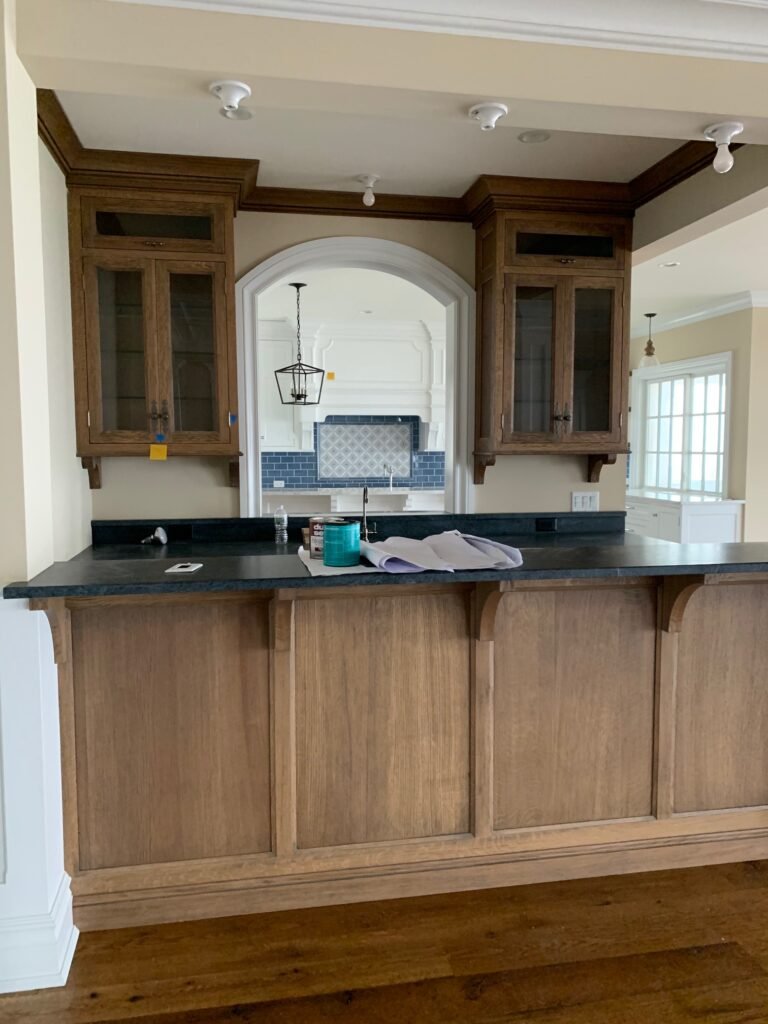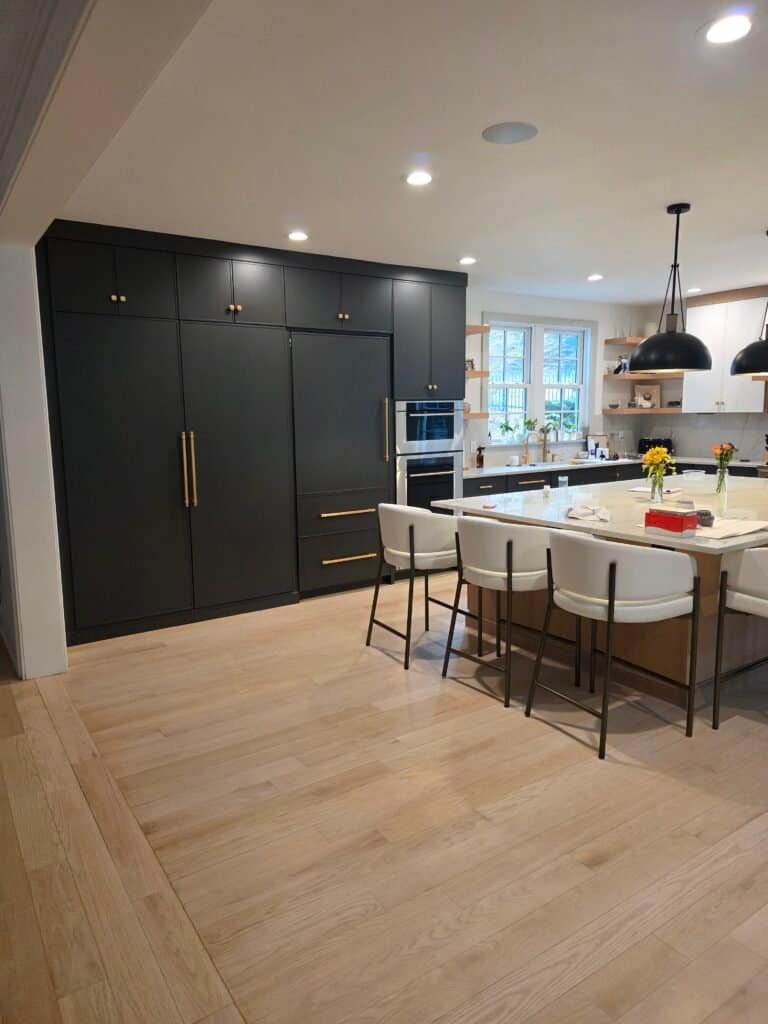

Even the most beautiful cabinetry can’t save a kitchen that’s poorly planned. A small layout error can lead to years of inconvenience — doors that collide, drawers that don’t open fully, or wasted corners that could’ve been extra storage.
Here are five common mistakes people make when arranging kitchen cabinets — and how to avoid them like a pro.
1. Ignoring the Work Triangle
The most frequent design mistake is forgetting about the work triangle — the imaginary line between your sink, stove, and refrigerator. If the path is too long, cooking becomes inefficient; too short — and you’ll feel cramped.
✅ Fix: Keep each leg of the triangle between 4 and 9 feet, and ensure nothing (like tall cabinets or an island) blocks your movement.
2. Placing Cabinets Too Close to Appliances
Another classic issue — installing upper cabinets or tall pantry units too close to ovens, refrigerators, or microwaves. The result? Limited access, blocked ventilation, and heat damage over time.
✅ Fix: Leave at least 3 inches of clearance around appliances and open space above ovens for airflow. Always test appliance doors on the design drawing before finalizing cabinet placement.
3. Forgetting About Countertop Space
Many homeowners fill every wall with cabinets, leaving no comfortable prep area near the stove or sink. Without enough counter space, even a large kitchen feels unusable.
✅ Fix: Ensure there’s at least 24 inches of countertop on one side of the sink and 15 inches on the other. Between cooking zones, plan 36–48 inches of continuous workspace.
4. Wasting Corner Space
Corners are often the most misused areas in a kitchen. Regular doors can’t open fully, and deep shelves become impossible to reach.
✅ Fix: Use corner cabinet solutions like Lazy Susans, pull-out trays, or angled corner drawers. Semi-custom cabinetry often includes smart corner options that save both space and time.
5. Overlooking Cabinet Height and Ceiling Proportions
Cabinets that are too short leave an awkward gap on top, while overly tall cabinets can overpower a small space.
✅ Fix:
- For 8-foot ceilings → choose 36-inch wall cabinets.
- For 9-foot ceilings → opt for 42-inch cabinets or add crown molding.
- For semi-custom or custom designs, adjust height in 2-inch increments for a perfect fit.
A Quick Note on Semi-Custom vs. Custom Solutions
When you’re ready to plan your kitchen, remember that both semi-custom and custom cabinetry can help you avoid these mistakes.
- Semi-custom cabinets allow flexible sizing, faster delivery, and six door styles to match any layout — see details on our Shop page.
- Fully custom cabinets are perfect for tricky floor plans or unique architectural features.
Learn more about our design and installation services at Choice Custom Cabinetry & Design or request a free project estimate.
Mistake number zero is ordering too late. Here is how long custom cabinets really take, stage by stage.